Shubman Gill vs Rishabh Pant: The Truth Behind India’s Test Vice-Captaincy Controversy
The Spark: Social Media Ignites India’s Vice-Captaincy Controversy
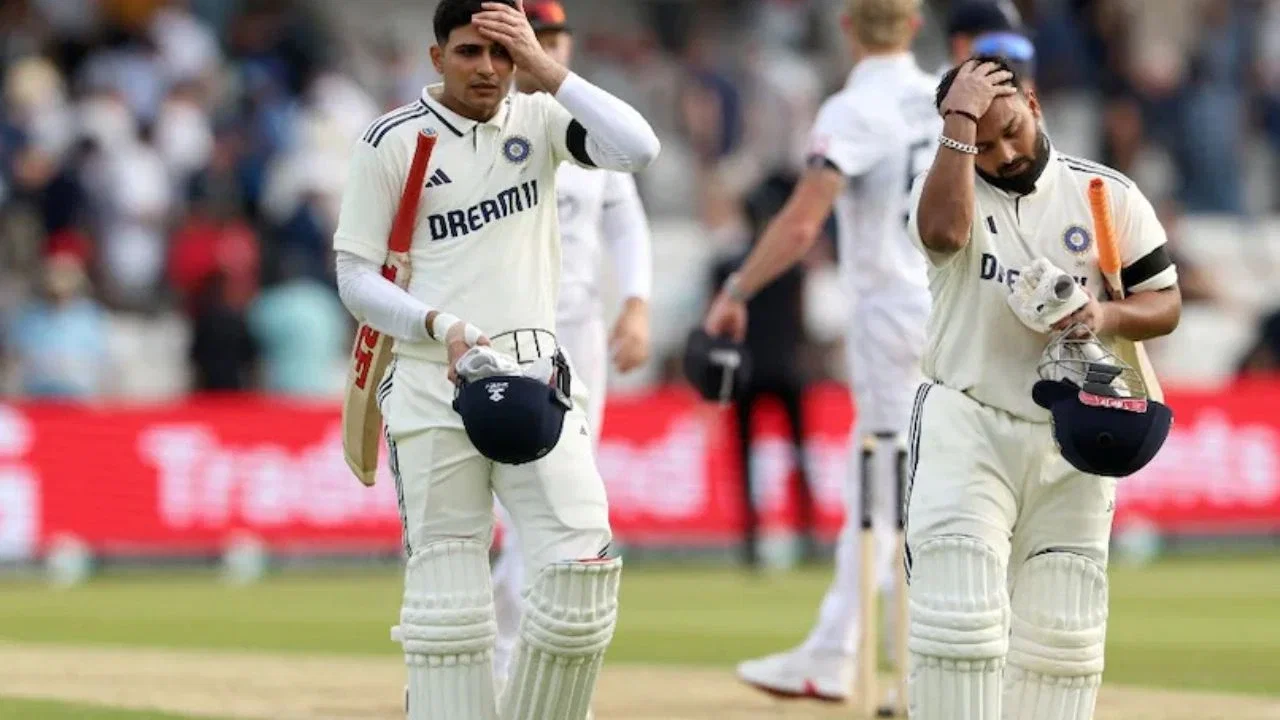
Indian cricket is currently witnessing an unexpected off-field storm. Following the selection committee’s announcement of the squad for the upcoming bilateral series against Afghanistan, a major leadership reshuffle has ignited intense speculation among fans and analysts alike. While Shubman Gill has been appointed as the skipper of the side, Rishabh Pant has been notably stripped of his vice-captaincy duties in the longest format of the game, with the selectors opting to hand the responsibility to the experienced KL Rahul instead.
Immediately after the announcement, conspiracy theories began circulating on social media. Many online critics accused Shubman Gill of orchestrating the move to sideline Pant, aiming to clear his own path as India’s undisputed, long-term red-ball leader. The digital fire was further fueled when Rishabh Pant’s sister liked an Instagram reel that openly discussed internal politics within the Indian dressing room and accused Gill of conspiring against the star wicketkeeper-batter. This single social media interaction transformed routine cricketing speculation into a viral national controversy.
Decoding the Squad Selection: India vs Afghanistan
To understand the selectors’ decisions, one must look at the upcoming assignment. The Board of Control for Cricket in India (BCCI) announced a squad for an upcoming bilateral window against Afghanistan, which features a one-off Test match alongside a three-match One Day International (ODI) series.
Shubman Gill will lead the side across this transitionary period. While Rishabh Pant retains his place in the Test squad as the primary wicketkeeper-batter, his demotion from the vice-captaincy remains the talking point. The decision to elevate KL Rahul to the vice-captaincy in the longest format suggests that the team management is looking for immediate stability and proven tactical acumen as they navigate critical World Test Championship (WTC) fixture windows.
Analyzing Shubman Gill’s Rise as India’s Test Captain
The narrative that Shubman Gill actively conspired against Rishabh Pant falls flat when analyzing the recent on-field achievements of both players under pressure. Gill’s transition into the leadership role has been characterized by notable resilience and tactical progress.
Under Gill’s captaincy, India managed to pull off a hard-fought drawn Test series against a formidable England side. During that highly competitive series, both Gill and Pant stood out as the primary run-getters, keeping the batting order stable. Following that, Gill successfully led India to their solitary series victory in the current World Test Championship cycle, defeating the West Indies on home soil.
However, Gill’s steady leadership trajectory was temporarily halted when he suffered a freak injury, ruling him out of the subsequent tour of South Africa. It was during this exact window that Rishabh Pant was handed the reigns of the side—a leadership experiment that did not yield the desired results.
The Turning Point: Pant’s Captaincy Struggles and WTC Pressure
While some social media narratives suggest a personal rivalry, objective cricket enthusiasts point directly to Rishabh Pant’s recent captaincy track record as the reason for his demotion. Pant’s record as a leader has raised concerns among selectors, both in international cricket and the Indian Premier League (IPL).
During Gill’s injury-enforced absence in South Africa, Pant was trusted to guide the national team. Under his captaincy, India suffered a historic home series defeat to South Africa—a shocking result that broke a nearly two-decade-long unbeaten home streak against the Proteas. This defeat has severely dented India’s chances of securing a top-two spot in the race for the World Test Championship (WTC) Final in 2027.
Furthermore, Pant’s tactical struggles were on display in IPL 2026, where his captaincy decisions failed to inspire his franchise to a successful campaign. With the pressure mounting to maintain a competitive edge on the global stage, the selectors clearly felt the need for a more dependable deputy who could step up seamlessly if Gill were unavailable.
KL Rahul: The Logical Choice for Stability
In contrast to Pant’s recent leadership struggles, KL Rahul presented himself as a highly reliable candidate. During the very same tour against South Africa where the Test side faltered under Pant, Rahul successfully captained the Indian ODI squad to a historic series victory on South African soil.
Rahul’s calm demeanor, extensive experience across all three formats, and previous leadership stints make him a natural fit for the vice-captain’s role. Rather than a political conspiracy orchestrated by Gill, the appointment of KL Rahul appears to be a purely meritocratic decision aimed at safeguarding India’s Test interests.
The Growing Influence of Social Media on Indian Cricket
This controversy highlights the increasingly complex relationship between modern cricketers, their families, and social media platforms. The modern-day dynamics of the dressing room are frequently scrutinized based on the digital footprints of players’ close relatives.
This is not the first time family activity on social media has caused a stir in Indian cricket. Previously, social media activity involving Shreyas Iyer‘s sister drew widespread attention and criticism, demonstrating how quickly online actions can turn into national headlines. In this instance, the reel liked by Rishabh Pant’s sister, created by digital content creator Pahul Walia, amplified internal team discussions into a public spectacle.
Ultimately, the BCCI cannot police the social media activity of players’ family members. While these digital interactions generate massive engagement and sensational headlines, the selectors remain focused on concrete performance, tactical stability, and securing crucial points on the road to the WTC 2027 final.