Bob Blair, who soldiered on after Tangiwai disaster, dies aged 94
A Life Defined by Courage
The global cricketing community is reflecting on the passing of a true icon of the game. It is with heavy hearts that we announce that Bob Blair, who soldiered on after Tangiwai disaster, dies aged 94. His death occurred on his 94th birthday, marking the end of a life that bridged the gap between the mid-20th-century era of cricket and the modern day. At the time of his passing, he held the distinction of being the fifth-oldest living Test cricketer, a testament to his longevity and his enduring connection to the sport he served with such stoic grace.
The Career of a New Zealand Fast Bowler
Bob Blair was not merely a symbol of resilience; he was a dedicated athlete who donned the silver fern for New Zealand across 19 Test matches between 1953 and 1964. During his international tenure, he claimed 43 wickets at an average of 35.23. While these statistics provide a factual account of his contribution to the game, they fail to capture the emotional weight of his most famous moment. It was not in the wickets he took, but in the ten minutes he spent at the crease in Johannesburg in 1953 that cemented his place in sporting folklore.
The Tragedy of Tangiwai
To understand the depth of Blair’s heroism, one must look at the events of December 1953. As the New Zealand team prepared for the Boxing Day play in their Test match against South Africa, news filtered through regarding a catastrophic railway accident in Tangiwai. A bridge had collapsed under an express train traveling from Wellington to Auckland, resulting in the loss of 151 lives. Among the victims was Nerissa Love, Blair’s fiancée.
At just 21 years old, the grief was unimaginable. While the team understood his need to remain at the hotel, the sight of a young man walking out to the middle, determined to support his teammate, remains one of the most poignant images in the history of the sport.
A Partnership Born of Adversity
When Blair walked to the crease as the No. 11, the crowd and his opponents were stunned. He joined Bert Sutcliffe, who had already displayed immense bravery himself. Sutcliffe had been forced to retire hurt earlier in the innings after being struck in the head by a ferocious bouncer from South African fast bowler Neil Adcock, an injury that left him bleeding from a split in his ear.
The two men, both battered by physical and emotional trauma, formed a partnership that would become legendary. Sutcliffe produced a scintillating knock of 80, featuring seven sixes, many executed with his trademark hook shot. Blair provided the steady support needed for the tenth wicket, contributing 33 vital runs before eventually being stumped for 6. Their defiance in the face of such profound circumstances remains an inspiring chapter in Test cricket.
A Lasting Legacy
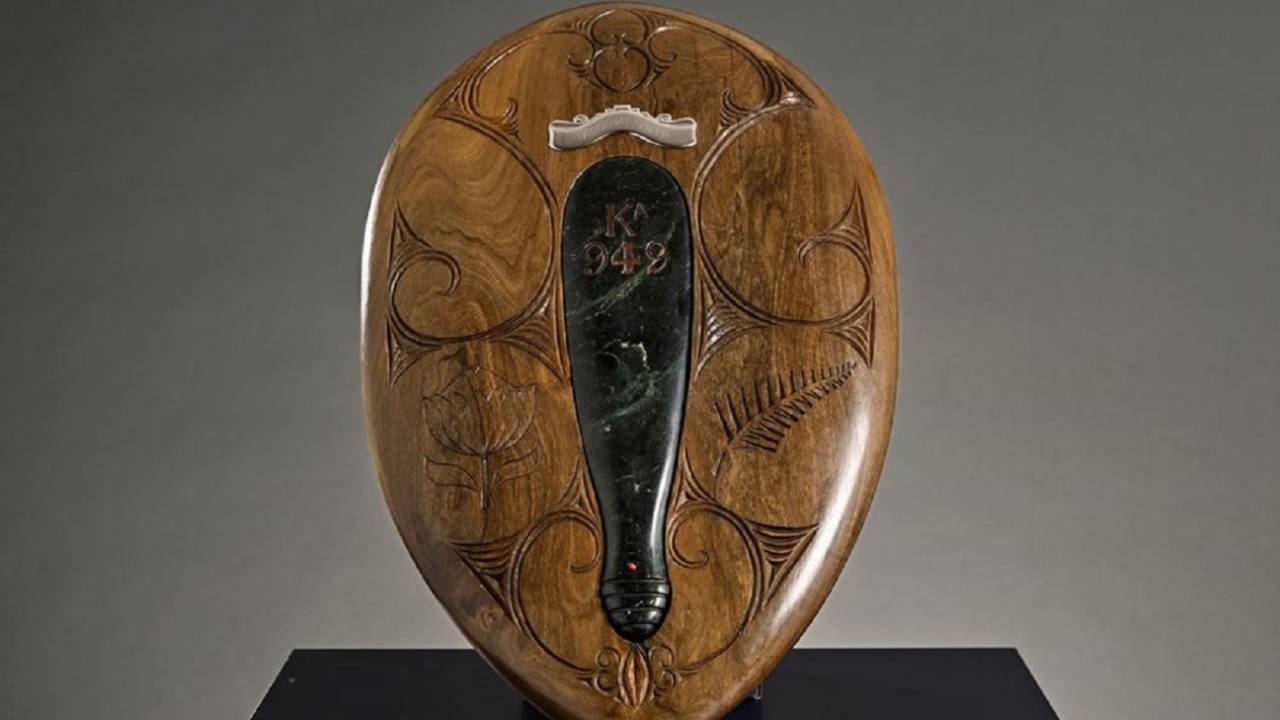
The impact of that day continues to resonate within the game. The Tangiwai Shield, contested by New Zealand and South Africa, serves as a permanent memorial to the tragedy. In a fitting tribute to the history shared between these two cricketing nations, New Zealand currently holds the shield, having secured it during the 2023-24 series—a landmark achievement as it represented the nation’s first-ever Test series victory over South Africa.
Bob Blair will be remembered not just as a fast bowler, but as a man who embodied the strength of the human spirit. His ability to stand tall when his world had fallen apart remains a powerful lesson for us all. Rest in peace, Bob Blair.