Sunil Gavaskar Goes Against IPL Authority to Support Rishabh Pant on ‘F’ Word Controversy
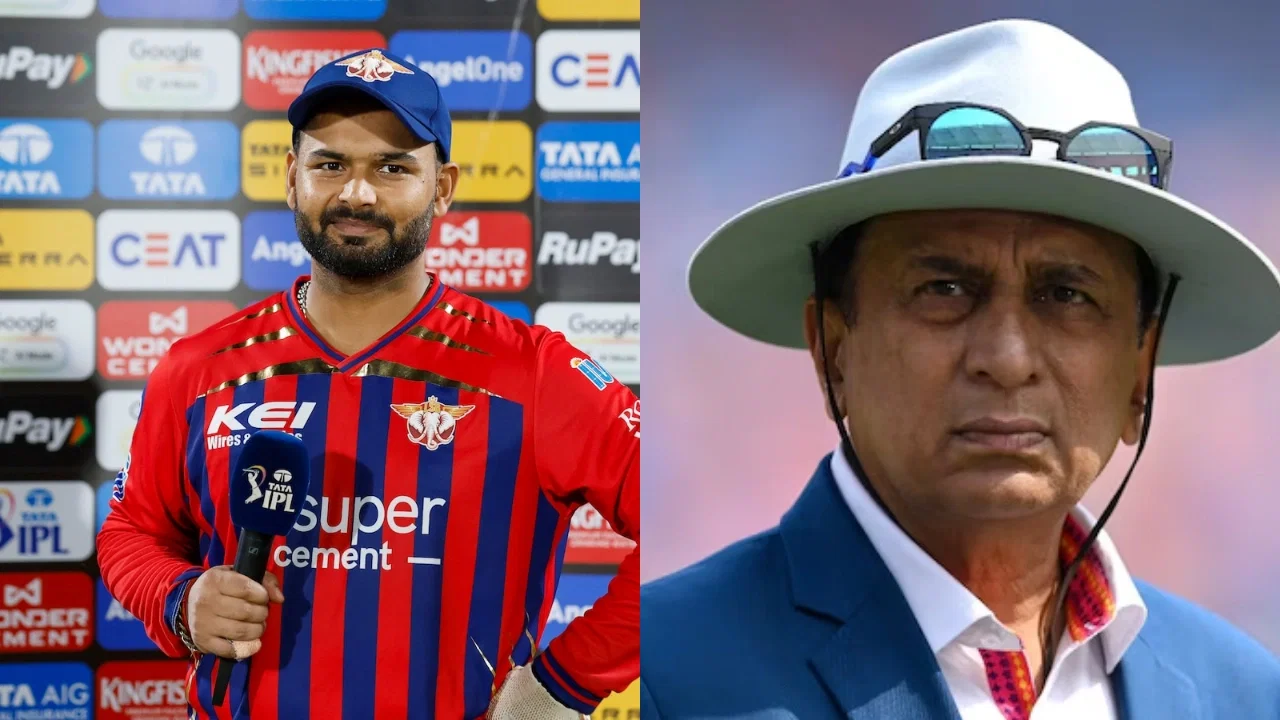
The world of cricket was recently caught by surprise when Indian wicketkeeper-batsman Rishabh Pant, in a moment of evident frustration during a post-match presentation, uttered an expletive. This incident immediately drew significant attention and commentary from across the cricketing fraternity. Notably, former West Indies cricketer and respected commentator Ian Bishop felt compelled to issue an apology on Pant’s behalf, emphasizing the traditional values of the ‘gentleman’s game’ and the importance of maintaining decorum in public appearances.
Sunil Gavaskar’s Unconventional Stance: Backing Rishabh Pant Amidst Controversy
However, amidst the general disapproval, a legendary figure in Indian cricket, Sunil Gavaskar, has offered a contrasting and rather unconventional perspective. Gavaskar, known for his forthright opinions and deep understanding of the game, has publicly come out in support of Rishabh Pant. This stance is particularly noteworthy given that Gavaskar himself had previously labeled Pant ‘stupid’ during a crucial Border-Gavaskar Trophy series, highlighting the evolution of his view on the young wicketkeeper-batsman’s actions in a high-pressure environment.
Understanding the Emotional Context: Gavaskar’s Rationale
In his column for Mid-day, Gavaskar delved into the circumstances surrounding Pant’s outburst, asserting that the ‘F’ word was not a deliberate act of disrespect but rather a spontaneous expression born purely out of intense emotion. The incident occurred after the Lucknow Super Giants (LSG), captained by Pant, had suffered their ninth defeat of the season. Facing a barrage of questions about the match’s outcome moments after a deflating loss, Pant’s emotional state was understandably fragile. Gavaskar argues that subjecting a losing captain to immediate media scrutiny, particularly after a disheartening defeat, fails to consider the immense mental and physical toll the game takes on players, especially those leading the side.
A Proposed Reform: Rescheduling Post-Match Interviews for Losing Captains
Building on this understanding of player psychology and the demands of competitive cricket, Sunil Gavaskar has put forth a significant suggestion to the IPL authority. He advocates for a fundamental change in the post-match interview protocol, specifically concerning the losing captain. Gavaskar believes that losing captains deserve a crucial few extra minutes to compose themselves, process the game, and gather their thoughts before being required to address the media. This brief respite, he argues, could significantly mitigate such emotional outbursts and ensure more thoughtful and coherent responses.
Challenging Tradition: The Current Protocol vs. A Player-Centric Approach
Traditionally, it is the captain of the losing team who is first called upon to speak during the post-match ceremony, followed by the winning team captain and then the Player of the Match. This long-standing practice, while efficient for media scheduling, often overlooks the human element of intense competition. Gavaskar’s proposal seeks to invert this order, or at least defer the losing captain’s interview, allowing them a critical window for decompression. This shift would represent a more player-centric approach, prioritizing mental well-being alongside media obligations.
“Rishabh Pant dropping the ‘F’ word in his post-game interview does make one wonder whether it is necessary to interview the captain whose team has just lost the game barely minutes earlier. If it’s been a last-over finish, then the disappointment for the captain would be even greater, and if he is also the wicketkeeper who has been running up and down to the stumps every other delivery and that too in this heat, then it can add to his frustration,” the former opener wrote in his column.
Gavaskar’s insightful observation highlights the multi-faceted pressures on a captain, particularly a wicketkeeper-captain like Pant, who is constantly involved in the game’s action under physically demanding conditions. The immediate aftermath of a close loss, coupled with the relentless physical exertion in high temperatures, creates a crucible of frustration. Expecting articulate and measured responses under such duress, Gavaskar implies, is often unrealistic and unfair.
“It might be a better idea to speak to the ‘player of the match’ from the winning team and give the captain of the losing team a little time to splash some water on his face and regain his composure, and then come over for an interview. As it is, there will be a bit of time for the presentation party to be ready, so giving the captain of the team that has lost a few more minutes could well ensure that such things won’t happen,” he added.
This practical suggestion from Gavaskar offers a clear pathway to improvement. By simply reordering the interview sequence, the IPL could provide a small but significant allowance for players to recover their mental equilibrium. This would not only reduce the likelihood of regrettable incidents but also potentially lead to more insightful and reflective interviews from captains who have had a moment to process the game’s events.
Rishabh Pant’s Unique Character and the Broader Lesson
The former cricketer further underscored Pant’s inherent nature, describing him as one of the most cheerful and uninhibited players on the field. Pant is known for his unique approach to the game, playing with a freedom and joy that is infectious. Gavaskar uses this characteristic to strengthen his argument, suggesting that if even a player with Pant’s generally jovial disposition loses composure, it speaks volumes about the intensity of the situation and the immediate pressure of the post-match interview.
“Rishabh Pant is one of the most cheerful guys in the game who loves playing the sport in his own unique way. And the fact that even he lost it does make the case for the losing team’s captain to be given a few more minutes to recover his thoughts rather than have the mic shoved in his face even before he has had time to get his breath back,” the column further reads.
This assertion by Gavaskar transforms the incident from a mere disciplinary issue into a crucial discussion about player welfare and the protocols surrounding professional sports. It highlights the psychological demands placed on athletes and the need for governing bodies to adapt their procedures to better support their mental and emotional states. Such an adjustment could foster a healthier environment for players, where natural human reactions, particularly after intense competition, are understood and accommodated, rather than immediately judged.
Implications for IPL and Beyond: Prioritizing Player Well-being
Sunil Gavaskar’s outspoken support for Rishabh Pant and his subsequent call for a change in interview protocols carry significant weight within the cricketing world. As one of the most respected voices in the sport, his suggestions are likely to prompt serious consideration from the IPL authority and other cricketing bodies globally. This controversy, therefore, serves as a pivotal moment for re-evaluating the balance between media obligations and the psychological well-being of players. Implementing a revised approach could not only prevent future similar incidents but also cultivate a more empathetic and sustainable environment for athletes competing at the highest levels of the game. It underscores the ongoing evolution of professional sports, where the mental and emotional health of its participants is increasingly recognized as being just as critical as their physical prowess.