Shahid Afridi Receives Hilal-e-Imtiaz Award Amidst Humorous Online Reaction
A Prestigious Honour with an Unintended Twist
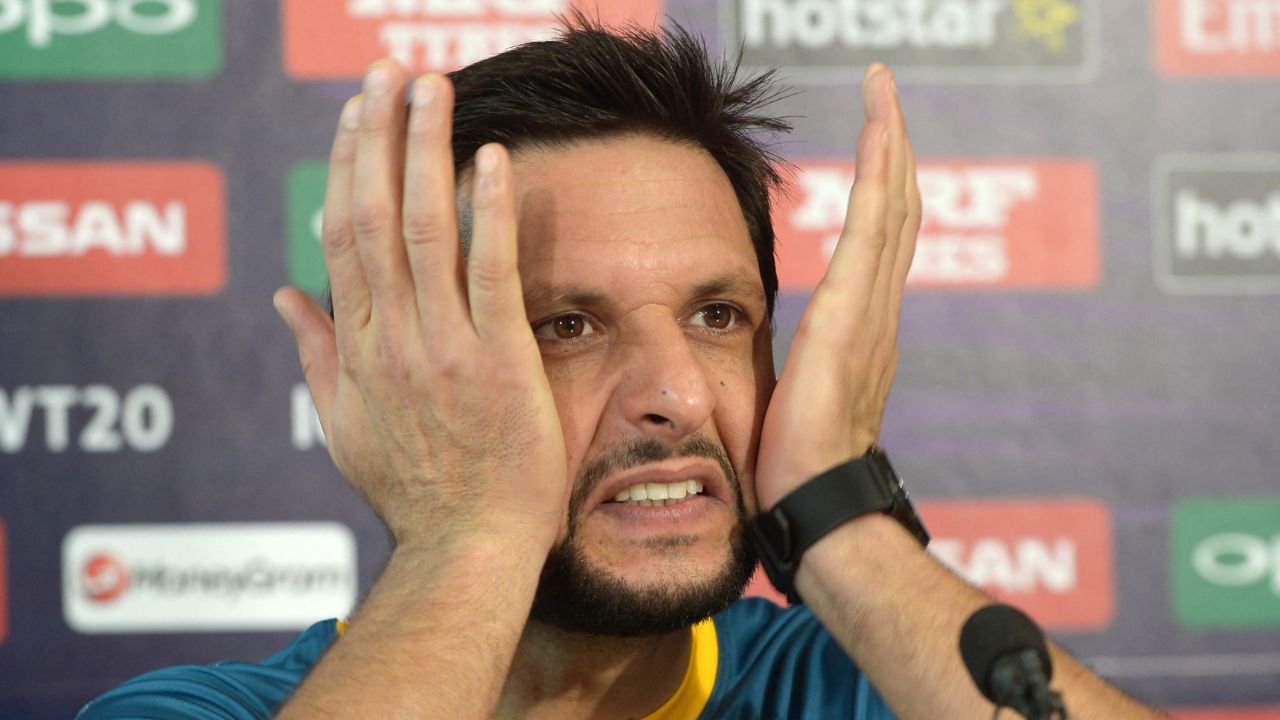
In a nation where cricket legends often achieve a status that transcends the boundaries of the sport, few names resonate as loudly as Shahid Afridi. The former Pakistan captain, known for his explosive style and match-winning capabilities, was recently awarded the Hilal-e-Imtiaz on Wednesday, May 13. While the award recognizes his exceptional contributions to the game, it has inadvertently become the subject of widespread social media discourse, particularly among Indian audiences, due to the phonetic similarity of the award’s name to certain terms in common Hindi slang.
Despite the unintended linguistic irony, the Hilal-e-Imtiaz remains one of Pakistan’s most significant honors. It is the second-highest civilian award presented to both civilian and military officials in the country. Afridi now joins an elite fraternity of cricketing icons who have received this recognition, including legendary fast bowlers Wasim Akram and Waqar Younis.
The Legacy of Shahid Afridi: A Glittering Career
To understand the significance of this award, one must look back at the electrifying career of the man affectionately known as ‘Boom Boom’. Afridi burst onto the international stage in October 1996 during a match against Kenya in Nairobi. He did not take long to announce himself to the world; in his first international innings, he smashed a breathtaking 102 runs off just 37 balls against Sri Lanka. That performance included 11 massive sixes and set a record for the fastest ODI century, a benchmark that stood for nearly two decades.
Over the course of his illustrious career, Afridi represented Pakistan in 27 Tests, 398 ODIs, and 99 T20Is. His contribution with the ball was equally historic, as he remains the most successful Pakistani spin bowler in international cricket with 541 wickets. With the bat, he was a force of nature, scoring over 11,000 international runs at a strike rate that often left spectators and bowlers stunned. Even in the longest format of the game, his strike rate of 86.97 reflected his aggressive philosophy.
Afridi’s impact was not just statistical; it was transformative. He was instrumental in Pakistan’s two Asia Cup triumphs (2000 and 2012) and played a pivotal role in leading the team to their first-ever ICC T20 World Cup title in 2009. To this day, he remains the third-highest six-hitter in international cricket history, trailing only the modern masters Rohit Sharma and Chris Gayle.
Navigating Through Controversies
No discussion of Shahid Afridi’s career would be complete without acknowledging the complexities that defined it. While his talent was unquestionable, his journey was frequently punctuated by controversy. In 2010, the cricket world was shocked when he was caught tampering with the ball during an ODI in Australia, an incident that resulted in a two-match ban.
Furthermore, his consistency in major ICC tournaments—with the notable exception of the 2009 T20 World Cup—was often a subject of criticism from fans and experts alike. In his post-retirement years, he has also frequently found himself in the headlines for provocative remarks directed at India and former Indian cricketers, further polarizing his public image.
Reflecting on the Recognition
The awarding of the Hilal-e-Imtiaz serves as a formal acknowledgment of a career that provided countless thrills to cricket fans worldwide. While the internet may focus on the humorous irony of the award’s title, the honor itself stands as a testament to Afridi’s longevity and his massive influence on Pakistan’s cricketing landscape. Whether remembered for his record-breaking sixes or the controversies that followed him, there is no denying that Shahid Afridi remains one of the most enigmatic and impactful figures in the history of the sport.