Reddy: ‘You’ve got to do something about your mindset’ in order to succeed – Nitish Kumar Reddy Emphasizes: ‘You’ve got to do something about your mindset’ in order to succeed
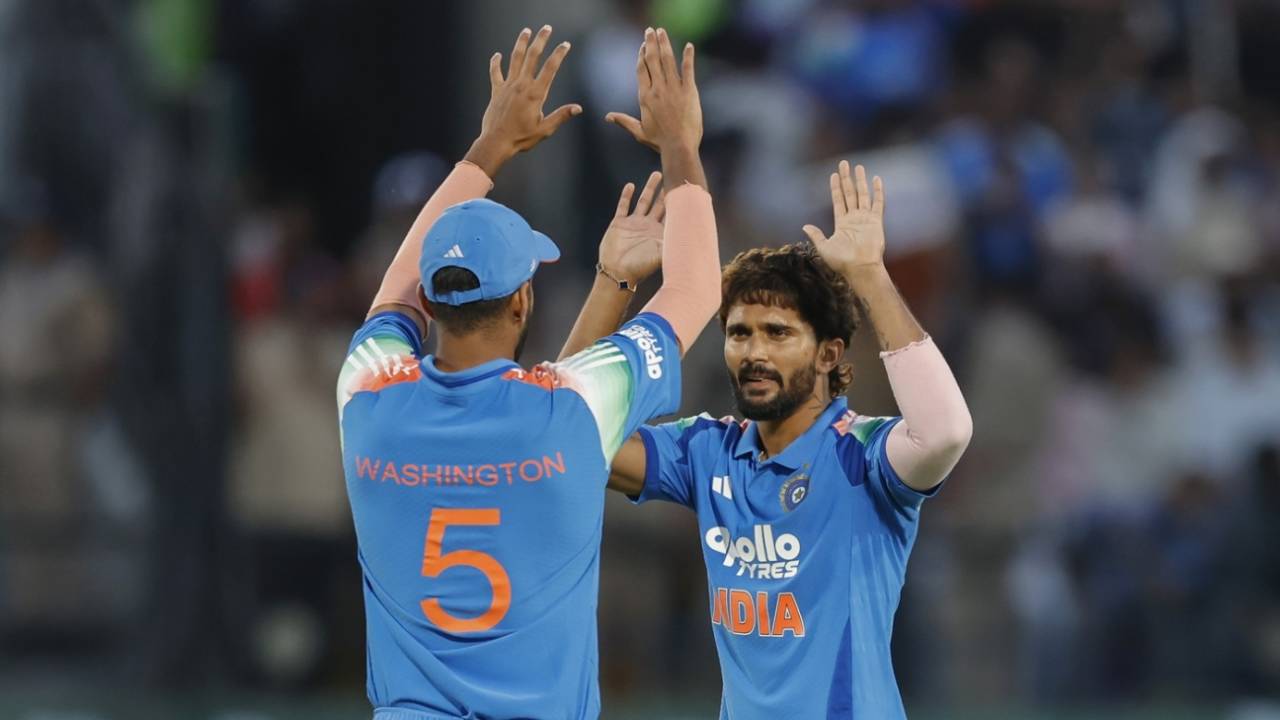
Indian all-rounder Nitish Kumar Reddy has rapidly emerged as a significant talent, showcasing his capabilities with both bat and ball, particularly during a stellar IPL 2026 season for Sunrisers Hyderabad. His impressive form has seamlessly transitioned into the international arena, highlighted by a strong start to the ODI series against Afghanistan. In the opening 25-over shootout, Reddy delivered a commendable performance, returning figures of 2 for 31 from his four overs, a key contribution in India’s seven-wicket victory.
In the absence of seasoned all-rounder Hardik Pandya, Reddy has stepped into a crucial role as the team’s primary seam-bowling all-rounder in the ODI format – a relatively new territory for him at this level. Far from being overwhelmed, Reddy revealed after the match that he had been “expecting this situation to come at any point” and was diligently “ready at the right time.” This proactive approach underscores his preparedness and mental fortitude for the demands of elite cricket.
Embracing the All-Rounder’s Dual Responsibility
At the post-match press conference in Dharamsala, Reddy articulated his straightforward philosophy regarding his role. “Just simple. As I always keep telling myself, as an allrounder, I have to keep doing both the jobs for my team, then the team is going to be in a great position,” he stated. This commitment to dual excellence – contributing significantly with both bat and ball – is central to his identity as a cricketer. He sees his role as one of constant readiness and intent. “I just have to show up, captain gives me the ball or team needs some runs, I just have to show up there and show some intent in the field. That’s how I see it as an allrounder.” This perspective highlights a player who understands his value and is always prepared to make an impact, whether it’s breaking a crucial partnership or accelerating the scoring rate.
Mastering the Craft: Bowling with Purpose
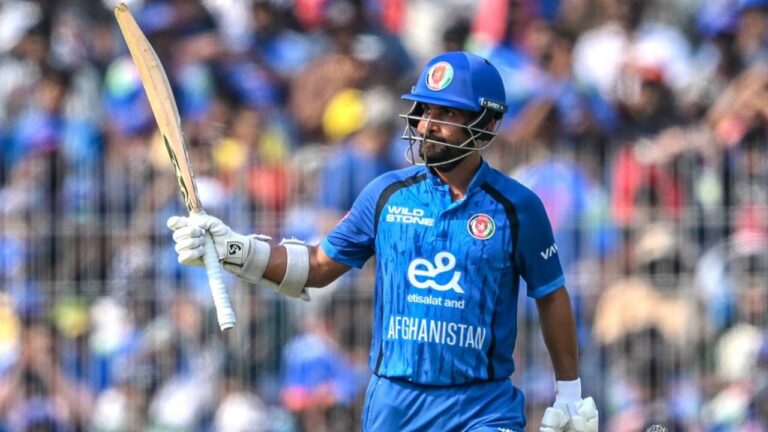
Reddy’s bowling efforts against Afghanistan were particularly impactful. His significant breakthrough came with the dismissal of the dangerous Rahmanullah Gurbaz, who had already notched up a century. Reddy outsmarted Gurbaz with a potent inswinging yorker, delivered at considerable pace, a testament to his evolving skill set. This crucial wicket showcased his ability to perform under pressure and execute complex bowling plans.
Reflecting on his bowling preparations, Reddy shed light on how the dynamics of T20 cricket, specifically the ‘impact player’ rule in tournaments like the IPL, influenced his training. “In T20s, like IPL and all, because of the impact player, I was not able to do complete four overs. So I was preparing myself to, you know, [that I] shouldn’t be clueless when captain gives me the ball. I have to have some plans,” he explained. Recognizing the reduced opportunities for a full quota of overs in T20s, Reddy emphasized the importance of rigorous practice. “If it’s not regularly bowling in matches, at least I would do my stuff in practise so I am ready at the right time.” This dedication ensures that even with limited match overs, he remains sharp, tactically aware, and ready to contribute effectively whenever called upon.
Reddy also voiced a broader perspective on the challenges faced by all-rounders and bowlers in modern T20 cricket. He believes that the current format often doesn’t allow for a proper comeback if a bowler has a couple of expensive overs. “For allrounders, it is a bit difficult because we always expect to get four overs [in T20s]. Even at first, one or two overs, if you get [hit], at least there will be two overs [left]; you can come back and you can give your effort. It used to be like that, but now if you bowl one or two overs bad, maybe that’s the end of the tournament also for some allrounders or bowlers.” This candid observation underscores the immense pressure players face. He advocated for more opportunities, asserting, “I believe bowlers should get four overs, and allrounders should get four overs. At least they need to get that experience.” This approach would allow for greater development and the chance to demonstrate resilience.
The Undeniable Power of Mindset
A significant factor in Reddy’s recent improvements as a bowler, including an increase in pace, can be attributed to his collaborative work with fast-bowling and high-performance coach Steffan Jones. While acknowledging the ongoing nature of this development, Reddy expressed optimism: “hopefully in the future, you can see me bowling [with] a little bit [more] pace.” However, he quickly clarified that physical skill alone is not the ultimate differentiator; it’s the mental game that truly separates the best.
“We all got skills, that’s why we’re here. But it’s about the mindset which you present over there,” Reddy asserted. This philosophy resonates deeply, especially when facing challenging match situations. He elaborated on the specifics of bowling in ODIs, particularly with an older ball after 20 overs, when conditions might favor batsmen and field restrictions (five fielders in) intensify the pressure. “You need to be strong, because the ball will be old after 20 overs [in ODIs] and you need to bowl those tight lengths with five fielders in and it’s just, you need to come back and hit the top of off and you know what the plan is, and it all depends on the situation, you know. You have to use the situation according to you and you have to improve and get some wickets over there. That’s how we prepare ourselves.” This detailed explanation highlights the tactical and psychological demands of executing plans effectively under duress.
Reddy further stressed the omnipresence of pressure in competitive cricket, whether in the high-stakes environment of the IPL or the intensity of international matches. He posits that while India is abundant with talent, what truly distinguishes players is their ability to manage this pressure. “I would say pressure is there everywhere. I mean, not in this setup, but IPL, you will be having pressure. But I always believe that India has so much talent and if you’re playing there, you’ve got to do something about your mindset. So when someone handles pressure well, that’s when you want to get some runs and get some wickets. Whoever handles pressure and keeps their mindset very good in the centre, they will be in upper hand.” This powerful statement encapsulates his core message: success at the highest level hinges on mental strength and the capacity to perform under extreme scrutiny. It’s about more than just skill; it’s about the psychological edge that allows a player to thrive when it matters most.
The Path to Sustained Excellence
Nitish Kumar Reddy’s journey serves as a compelling reminder that while natural talent and physical prowess are foundational, true success in professional cricket is inextricably linked to mental resilience and strategic preparation. His commitment to honing both his physical skills and his psychological approach offers a blueprint for aspiring cricketers. By emphasizing the critical role of a robust mindset, Reddy not only elevates his own game but also provides invaluable insight into the inner workings of an elite athlete determined to make a lasting impact. His message is clear: to truly succeed, one must consciously and continuously work on their mental game, transforming potential into performance on the biggest stages.