“Don’t have to be Vaibhav Sooryavanshi”: Indian cricket legend’s advise for Yash – Harbhajan Singh’s Advice to Yashasvi Jaiswal Before GT vs RR Clash
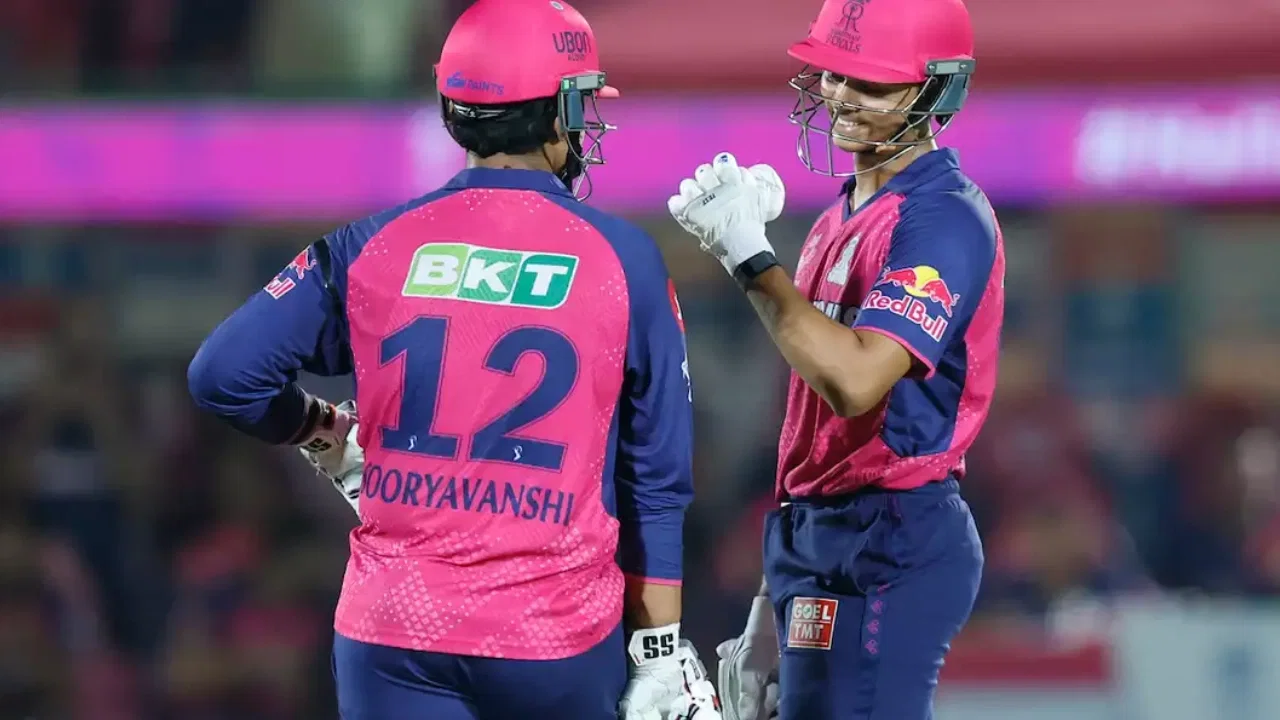
The Pressure of Expectations: Jaiswal and the Sooryavanshi Effect
The buzz surrounding the IPL 2026 season has been dominated by the meteoric rise of young sensation Vaibhav Sooryavanshi. As the Rajasthan Royals gear up for a pivotal Qualifier 2 match against the Gujarat Titans, social media and cricket analysts alike are preoccupied with the 15-year-old batting phenom. However, amidst the noise, former Indian spin wizard Harbhajan Singh has shifted the spotlight back to a vital cog in the Royals’ machinery: Yashasvi Jaiswal.
Before the emergence of Sooryavanshi, Jaiswal was widely hailed as the brightest young prospect in Indian cricket. While the prospect of pairing these two explosive talents is exciting on paper, the practical application has shown some friction. Jaiswal, who has accumulated 426 runs across 15 innings this season at a healthy strike rate of 152.23, appears to be struggling with an identity crisis at the crease, potentially fueled by the desire to match the power-hitting exploits of his teammate.
Defining Roles: The Four-Hitter vs. The Six-Hitter
Harbhajan Singh, speaking on Star Sports, highlighted a fundamental technical and stylistic difference between the two batters. According to the veteran, the root of Jaiswal’s recent struggles lies in an attempt to mimic the six-hitting prowess of Sooryavanshi rather than sticking to his own proven strengths.
“If I am in the RR camp, I will tell him just one thing: ‘You don’t have to try and be Vaibhav Sooryavanshi. You have to remain Jaiswal.’ Just be Jaiswal; he is far ahead of many players. Not many have the kind of game that he has,” Harbhajan emphasized. The core of the issue, as Harbhajan explains, is that Jaiswal is inherently a natural ‘four-hitter’ who excels through timing and placement, whereas Sooryavanshi thrives as a natural ‘six-hitter’.
Technical Adjustments for Success
The former Indian cricketer observed that when Jaiswal forces himself to clear the ropes with brute power, it disrupts his technical foundation. “Yashasvi just needs to time the ball. He is also trying to hit the ball too hard, which is why his body weight is going backwards, and the ball is going in the air. All he needs to do is just back himself and play along the ground and time the ball,” Harbhajan noted.
This technical imbalance is a classic trap for aggressive openers. By trying to muscle the ball, Jaiswal is inadvertently compromising his balance. Harbhajan suggests that if the young opener returns to the basics of timing his shots, the sixes will inevitably return as a byproduct of his natural flow, rather than through forced effort.
The Challenge Ahead: Facing the Titans
The upcoming Qualifier 2 is set to be a titanic struggle. While the Rajasthan Royals carry the momentum, the Gujarat Titans present a fundamentally different threat compared to the Sunrisers Hyderabad. The Titans possess a disciplined and high-quality bowling unit that is unlikely to be as forgiving as the SRH attack.
“The match is in Punjab. Shubman Gill will feel at home. However, I feel Rajasthan is definitely slightly ahead because of the momentum, but with the kind of team and bowling attack GT has, they will not concede the kind of runs that SRH did,” Harbhajan concluded. This reality check serves as a reminder that in high-pressure matches, relying on consistency and technique is often more effective than relying solely on raw, high-risk power hitting. For the Rajasthan Royals to reach the final, they will need Jaiswal to be at his most composed and authentic version, rather than an imitation of his explosive younger teammate.