BCB appoints only one vice president as Fahim Sinha takes role: A New Chapter Begins
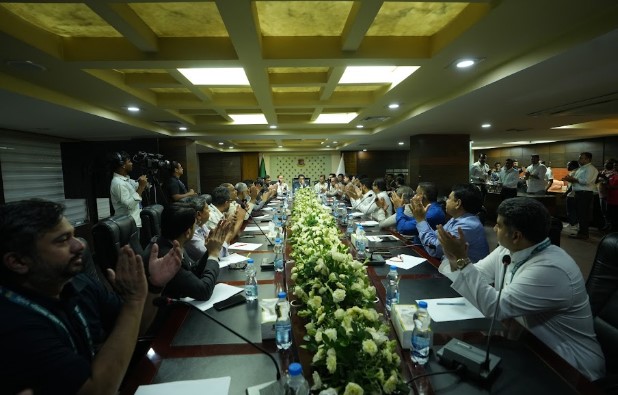
The Bangladesh Cricket Board (BCB) has recently announced a significant administrative decision, appointing only one vice president for the newly elected committee: the experienced cricket administrator Fahim Sinha. This move marks a notable departure from the BCB constitution, which permits the appointment of two vice presidents, a practice upheld by previous boards, including the one led by Aminul Islam Bulbul. The decision highlights a deliberate and unified approach by the current board under President Tamim Iqbal.
A Singular Appointment: Fahim Sinha Takes the Helm
Fahim Sinha’s appointment as the sole vice president at this initial stage underscores his standing within the Bangladeshi cricketing fraternity. Known for his extensive experience and contributions to cricket administration, Sinha’s selection was made with the unanimous consent of the board members. This strategic choice positions him as a key figure in the BCB’s operational framework as the board embarks on its new term, setting a distinct precedent for its leadership structure.
President Tamim Iqbal’s Rationale
BCB President Tamim Iqbal elaborated on the rationale behind the decision, stating that it was the outcome of extensive discussions and collective agreement among the board members. Iqbal, a respected figure in Bangladeshi cricket, revealed that he was the proponent of appointing only one vice president for the time being. This measured approach suggests a preference for a streamlined leadership model at the outset, allowing for adaptability as the board’s needs evolve.
“I was the one who proposed appointing only one vice president for now,” Tamim Iqbal explained. “That doesn’t mean we won’t appoint another one in the future. If the board feels it is necessary, we will definitely appoint another vice president. For now, the board agreed on this decision. Fahim Sinha was selected with everyone’s consent.” This statement clarifies that the current setup is not necessarily permanent but rather a strategic starting point, reflecting a pragmatic leadership philosophy.
The Prospect of a Second Vice President
The possibility of appointing a second vice president at a later date remains open, as emphasized by President Iqbal. This flexibility ensures that the board can adjust its administrative structure based on future requirements and challenges. The constitutional provision for two vice presidents offers this inherent adaptability, allowing the BCB to scale its leadership as necessary to support the growing demands of cricket in Bangladesh.
Iqbal further clarified the collective nature of the decision-making process: “It doesn’t matter what you or I think individually. The board decided to start with one vice president, and everyone supported it by raising their hands. Again, this doesn’t mean another one won’t be appointed in the future. It can come from any category if needed.” This reiteration underscores the democratic process within the board and the broad consensus achieved regarding Fahim Sinha’s initial appointment and the overall strategy for vice presidential roles.
This approach could be interpreted as a strategy to consolidate power and decision-making within a tighter circle initially, ensuring efficient rollout of new policies or a more focused administrative drive. It also potentially allows the board to assess its needs and the performance of its initial structure before committing to a second high-ranking administrative role. The choice of Fahim Sinha, an experienced administrator, is crucial in this context, as his expertise will be vital in navigating the complexities of the BCB’s responsibilities.
Addressing Past Controversies: The E-voting Debate
Alongside the discussion on appointments, President Tamim Iqbal also took the opportunity to address the contentious issue of e-voting, which had sparked controversy during the previous BCB elections. While not directly related to Fahim Sinha’s appointment, Iqbal’s comments indicate a commitment to transparency and fairness in electoral processes, acknowledging past concerns.
“I have spoken about e-voting before as well. My main concern was when 30-40 people voted together from one place. That was my issue,” Iqbal stated. “If someone votes individually from home, that’s different. But if 20–30 people sit together and vote, that becomes unfair. E-voting is part of the constitution.” His remarks highlight a nuanced understanding of digital voting mechanisms, distinguishing between legitimate individual participation and potentially compromised group voting scenarios that could undermine the integrity of the election process. By addressing this, Iqbal signals the new board’s awareness of past issues and a potential commitment to refining electoral practices within the bounds of the BCB constitution.
The discussion around e-voting underscores the broader administrative challenges and reforms that the new BCB committee might be looking to address. Ensuring fair and transparent elections is paramount for maintaining the credibility and legitimacy of the board, especially when significant leadership roles are being filled. Iqbal’s proactive stance on this matter reflects a desire to move forward with integrity, building trust among stakeholders and the wider cricketing community.
Conclusion: A New Era for BCB Leadership
The decision by the Bangladesh Cricket Board to appoint Fahim Sinha as the sole vice president marks a strategic and deliberate step in the new committee’s tenure. Under President Tamim Iqbal’s leadership, this approach signals a focused direction, with the flexibility to adapt as future needs arise. The board’s unanimous consent on this appointment, coupled with Iqbal’s transparent communication regarding both the vice presidency and past electoral issues, sets a professional tone for the BCB’s operations moving forward. As the board settles into its new structure, all eyes will be on how this streamlined leadership impacts the development and governance of cricket in Bangladesh.