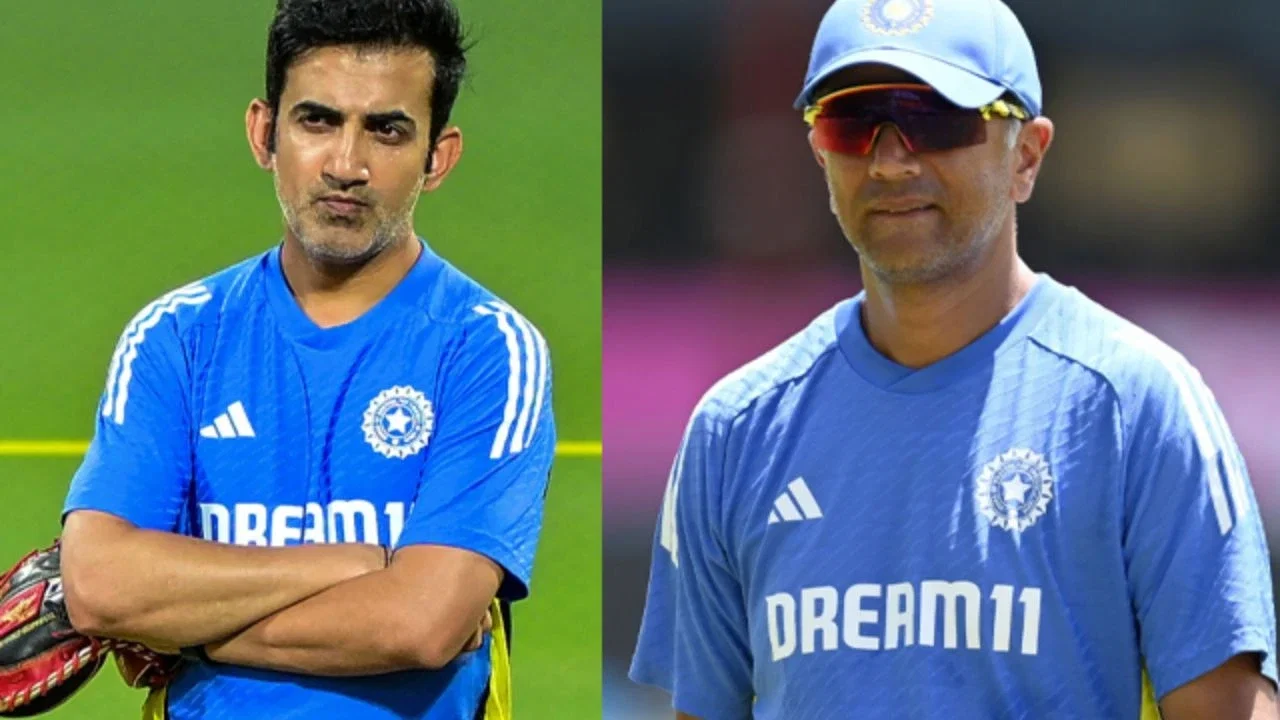
In a significant divergence of opinion that has sparked considerable debate within Indian cricket circles, former head coach Rahul Dravid has articulated a compelling argument for the importance of ‘heroes’ and individual brilliance in the sport. This perspective stands in stark contrast to the ‘no-superstar policy’ reportedly favored by current Indian head coach Gautam Gambhir, particularly as the team navigates a challenging period in Test cricket.
Dravid’s Stance: The Indispensable Role of ‘Heroes’
Rahul Dravid, often revered as ‘The Wall’ for his steadfast contributions to Indian cricket, firmly believes that individual success is not merely a personal achievement but a vital building block for a team’s collective glory. His philosophy underscores the notion that ‘superstars’ are not a detriment but rather an essential ingredient for capturing the imagination of a nation and driving team victories.
Dravid elaborated on his views, stating, “Any sport needs its heroes, and people do not become heroes without performances. You cannot capture the imagination of a nation if you do not deliver on the field, especially in India, where you get a lot of praise for what you do, but also a lot of brickbats.” He highlighted the intense scrutiny faced by top cricketers in India:
- “There is a lot of scrutiny and constant focus on you.”
- “To become a legend or a superstar in India means you have done a lot of things right.”
- “In the process, you have also helped your team win.”
This statement, shared with Wisden on the Scoop podcast, implicitly critiques any policy that might diminish the role or recognition of such iconic figures, suggesting that their very existence is a testament to on-field excellence and team contribution.
Gambhir’s Tenure: A Tale of Contrasting Fortunes
While Gautam Gambhir has enjoyed tremendous success in white-ball cricket, guiding India to victory in the 2025 Champions Trophy and the 2026 ICC T20 World Cup, his coaching tenure has been marred by significant failures in the longest format of the game. The stark contrast in results under Gambhir’s leadership has intensified the scrutiny on India’s red-ball performance.
Under Gambhir’s coaching, India has faced severe setbacks in Test cricket:
- A whitewash at home against New Zealand in 2024.
- Another whitewash against South Africa at home in 2025.
- The only respite came in a tied series between India and England in 2025.
These results are particularly alarming given India’s recent history of success in Test cricket. The team, which had previously reached the World Test Championship (WTC) finals twice in the past three seasons under Dravid’s guidance, failed to qualify for the 2025 WTC final. Furthermore, their chances of making it to a third WTC final in 2027 appear slim, with India lagging significantly in the points table.
The current struggles in Test cricket present a challenging narrative, especially when juxtaposed with the immense white-ball achievements. The debate around a ‘no-superstar policy’ gains prominence in this context, with some questioning whether such an approach inadvertently impacts the team’s ability to produce match-winning performances in Test cricket, where individual brilliance often turns the tide.
Dravid on the Evolution of Test Cricket and Player Challenges
Reflecting on the broader landscape of Indian cricket, Dravid acknowledged the challenges faced by modern players. He led India to the 2023 WTC Final, where the team, despite a valiant effort, ultimately fell short. However, his tenure saw a consistent performance in the format.
Addressing the current state of red-ball cricket, Dravid maintained its paramount importance. “The passion to do well in red-ball cricket is definitely there. We have had a couple of series where we have not performed as well as an Indian team, and that can happen.” He also pointed to the significant void left by recent retirements:
- Rohit Sharma
- Virat Kohli
- Ravichandran Ashwin
Dravid emphasized, “It is not easy to replace players like that.” Despite these departures, he expressed confidence in the enduring strength of Indian cricket, asserting that the team will remain competitive across all formats, even if this evolutionary phase requires some time.
The Indian great also highlighted how the demands on players have intensified compared to his playing days. While acknowledging the current generation’s commitment to Test cricket, he pointed out the difficulties in maintaining form across formats due to the increasing volume of games.
“Red-ball cricket is still very important. There are still players who want to play red-ball cricket. Among players, there is a strong sense that it is probably the toughest format of the game and something that brings a lot of personal satisfaction when you succeed in it. But there is also a lot of white-ball cricket being played, and we have to be realistic about that,” he explained.
Dravid drew a clear distinction between his era and the present day regarding preparation time. “Many of these players today are having to juggle multiple formats, and it is not always easy because they may not get as much time to prepare for red-ball cricket as my generation did. We effectively had fewer formats, and when I think about the preparation that went into some of the Test series I played, I feel the current players, not because they do not want to, but because of the volume of cricket, are sometimes unable to find that same balance.”
Conclusion: A Critical Juncture for Indian Test Cricket
The philosophical debate between Rahul Dravid and Gautam Gambhir over the role of ‘superstars’ and individual focus comes at a critical juncture for Indian Test cricket. While Gambhir’s white-ball strategies have delivered silverware, the consistent struggles in the longest format demand a re-evaluation of the approach. Dravid’s arguments for embracing heroes and acknowledging the unique challenges of modern-day cricket offer a perspective that champions both individual excellence and the integrity of Test cricket. As the team looks to rebuild and find its footing in red-ball cricket, the balance between collective strategy and the cultivation of individual brilliance will undoubtedly be a key factor in determining India’s future success.