“I knew he would play for Bangladesh” – Ashraful shares untold stories about Nahid Rana
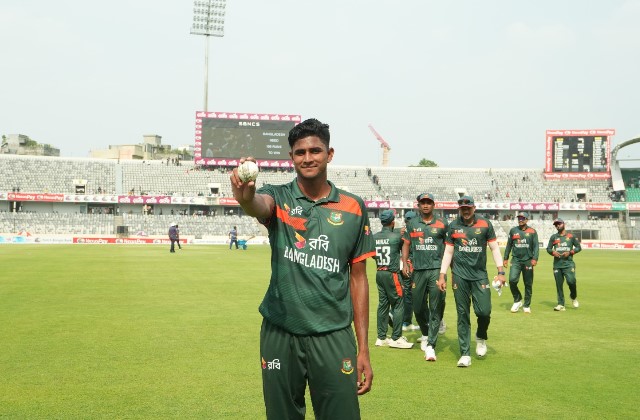
The Emergence of a Pace Sensation
In the evolving landscape of Bangladesh cricket, few success stories have been as compelling as that of Nahid Rana. The young fast bowler has taken the international stage by storm, but according to former captain and batting coach Mohammad Ashraful, his meteoric rise was entirely predictable. Ashraful recently sat down to share his firsthand observations, detailing the exact moment he realized that a young, untested bowler would inevitably become a cornerstone of the national setup.
A Chance Encounter in Cox’s Bazar
The story begins on the domestic circuit. Ashraful recalls facing the youngster during his debut match against Barishal in Cox’s Bazar. “The first time I saw Nahid Rana was in his debut match. I was opening the batting and faced him that day,” Ashraful shared. It was during this contest that the veteran batter felt the distinct velocity that would later rattle international lineups. Even in those early days, Nahid’s pace stood out as being superior to many established names in the domestic circuit.
Following the match, the two stayed at the same hotel, leading to a pivotal conversation. Ashraful was shocked to learn that despite his raw talent, Nahid had not even been included in the preliminary Under-19 squad of 45 players. “Honestly, I was surprised to hear that,” Ashraful admitted, noting that he immediately reached out to selectors to highlight the unique talent he had just encountered.
The Grit Behind the Pace
Ashraful’s belief in Nahid went beyond just raw speed; it was rooted in the young man’s character. Having played international cricket for 13 years and captained the national side, Ashraful possesses a keen eye for talent that can withstand the pressures of the elite level. He spent time mentoring the youngster, emphasizing the need for discipline and physical maintenance.
Over the last seven months, while working within the national team setup, Ashraful has been consistently impressed by Nahid’s work ethic. Unlike many who allow sudden fame to alter their demeanor, Nahid has remained remarkably grounded. “Usually when someone becomes a star, their behavior changes. But in the last seven months, I’ve seen Nahid wake up early every day for Fajr prayers. He performs all five daily prayers regularly,” said Ashraful.
Dedication That Defines Excellence
The commitment to excellence is perhaps best illustrated by a specific anecdote from the Pakistan Super League (PSL). After a high-pressure final, while most players would be looking to rest, Nahid’s priority remained his physical conditioning. “He returned to the hotel, dropped off his bags, and then went straight to the swimming pool at night. He swam for about half an hour. Seeing that level of dedication to fitness really impressed me,” Ashraful noted.
This unwavering focus on recovery and fitness is a testament to the adversity Nahid has already overcome. Early in his career, he battled a significant leg injury, yet he navigated his rehabilitation with a level of seriousness that few youngsters possess. This resilience is what Ashraful believes sets him apart from his peers.
A Future Built on Hard Work
Ashraful, who famously battled his own setbacks during his formative years, sees a reflection of his own determination in the young pacer. Their time together at the Rangpur Riders during the Bangladesh Premier League (BPL) further solidified this opinion. Through two seasons of BPL action, Ashraful watched Nahid evolve from a prospect into a consistent performer across all formats of the game.
As Bangladesh cricket continues to seek out genuine pace options, the endorsement from a stalwart like Ashraful holds immense weight. He confirms that the talent is not just a flash in the pan but a product of deep-seated discipline, religious devotion, and a relentless desire to improve. For fans watching Nahid Rana steam in to bowl today, it is worth remembering that, for those who saw him early, his success was never a matter of if, but a matter of when.