Explained: Why Jofra Archer isn’t in England’s Test squad
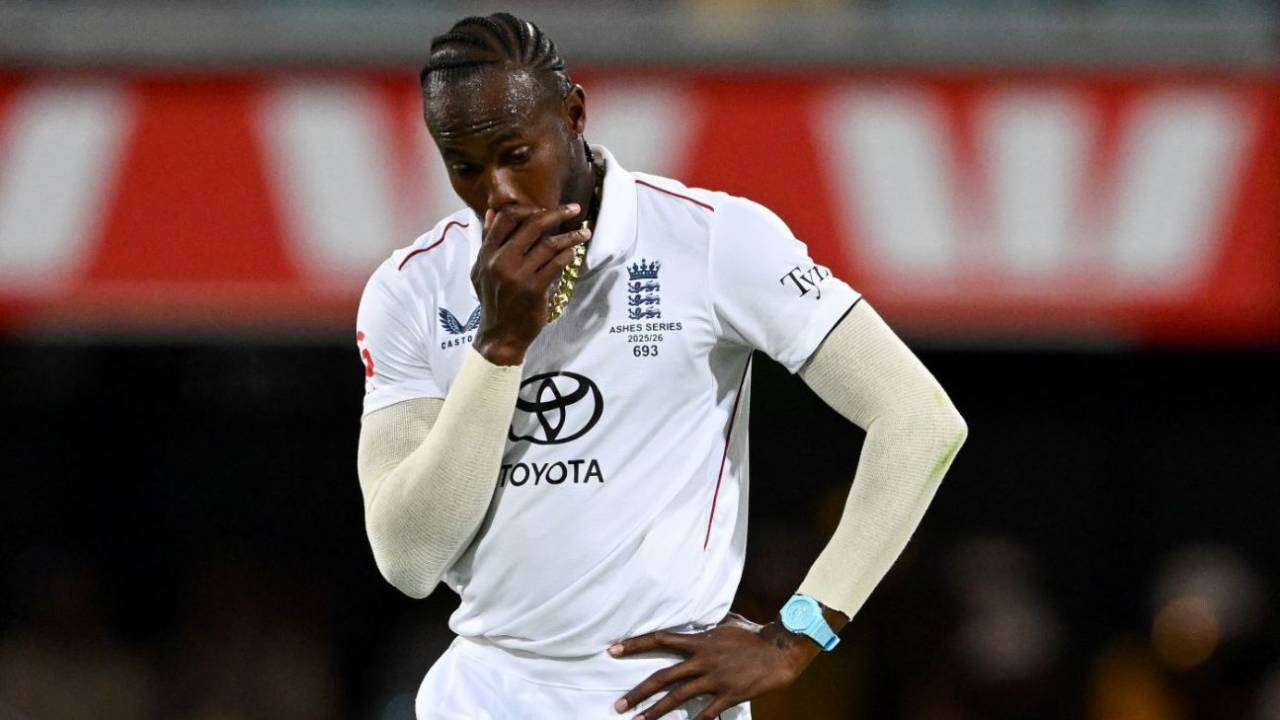
England’s highly anticipated first Test match in five months against New Zealand at Lord’s is set to commence on Thursday, but one prominent name will be conspicuously absent from the squad: Jofra Archer. Despite holding a central contract with the England and Wales Cricket Board (ECB), Archer was described as “unavailable” for the opening Test by Rob Key, England’s managing director, when the squad was announced. This situation has reignited debates surrounding player welfare, central contracts, and the increasing influence of global T20 leagues on international cricket schedules. Understanding the nuances of Archer’s situation requires a deeper look into his recent career, injury management, and the intricate balance national boards must strike in the modern cricketing landscape.
Why is Archer ‘unavailable’?
When England unveiled their 15-man squad, which initially covers only the first of three Tests against New Zealand, Rob Key clarified that Archer’s unavailability stemmed from a strategic decision focused on “building him up for red-ball cricket after a long six months on the road.” Archer’s return to Test cricket last summer, following a four-year absence, saw him participate in England’s drawn series against India. He then featured in the first three Tests of their challenging Ashes tour to Australia before a side strain forced him out. Following this, his commitments led him to the T20 World Cup in Sri Lanka and India, and shortly after England’s semi-final defeat, he returned to India for the Indian Premier League (IPL).
It is Archer’s extensive involvement in the IPL, where he was instrumental in Rajasthan Royals reaching the second qualifying final with 25 wickets, that has effectively precluded him from the first Test. His bowling workload in recent months has been primarily limited to four-over spells in T20 cricket, with no instance of bowling more than four overs in a match since the third Ashes Test in December. After the Royals’ exit from the IPL last Friday, Archer travelled home to Barbados for a brief period of rest, further highlighting the tight schedule and the difficulty in transitioning quickly to the demands of Test cricket.
Could England have stopped Archer playing in the IPL?
In theory, the ECB could have prevented Archer from participating in the IPL, but such a move carried significant risks, potentially jeopardising his long-term commitment to English cricket. The landscape of player management in franchise leagues has evolved significantly. Following the 2024 IPL season, where several England players departed early for a T20I series against Pakistan, the ECB reached an agreement with the BCCI (Board of Control for Cricket in India). This agreement stipulated that England players signed in the IPL would be granted No-Objection Certificates (NOCs) for the entire season moving forward, signifying a shift towards accommodating player participation in the lucrative league.
Furthermore, the BCCI had tightened its own regulations ahead of the 2025 season. New stipulations dictated that players who failed to register for a mega-auction would be ineligible for the subsequent season, and those who withdrew from contracts would face bans for two future seasons. Archer’s involvement in the 2025 IPL was a result of detailed discussions. He did not initially enter the mega-auction but was a late addition to the longlist after consultations between his representatives, the ECB, and the BCCI. Subsequently, he was signed for INR 12.5 crore (approximately £1.2 million at the time) by the Rajasthan Royals, who have since retained him, underscoring the financial incentives and contractual obligations involved.
Could Archer have increased his workloads at the IPL?
While it is not entirely unheard of for players to bring red balls to the IPL and use the opportunity to prepare for Test cricket while in India, increasing one’s workload to Test match standards amidst a T20 tournament presents considerable challenges. Kumar Sangakkara, the Royals’ head coach, candidly stated last month that it would have been “very difficult” for Archer to significantly increase his bowling workload when he was limited to bowling only four overs per match in the IPL. “Especially [for] a Test match, it’s very difficult to get your bowling loads up very soon when you’re only bowling four overs, so he needs time to get that done,” Sangakkara explained. He also noted that the ECB was “gracious enough to let him stay and understand that he’ll be fine once he gets his bowling loads up, once he leaves the IPL,” indicating a shared understanding of the situation and Archer’s need for specific preparation time.
What do England’s management make of the situation?
Rob Key, England’s managing director, addressed Archer’s unavailability as a reflection of “the world we live in,” acknowledging the increasing competition between national boards and powerful IPL franchises for top cricketing talent. Key articulated the delicate balancing act faced by cricket administrators: “We’re always trying to do the dance between making sure that we have our best players playing and available as much as possible [but] there’s a hell of a lot of cricket, and actually, you want them to be coming in fresh, ready, and have enough bowling under them so they can perform at their best.” This statement underscores the commitment to player welfare and ensuring that when players do represent England, they are physically and mentally prepared for the rigours of international cricket, especially the demanding format of Test matches.
What does Ben Stokes make of it?
England’s Test captain, Ben Stokes, offered a nuanced perspective during his pre-match press conference. He conveyed understanding for “both sides of the story,” acknowledging the public’s frustrations while also highlighting the underlying complexities. “There is another side to it,” Stokes stated, attributing much of the situation to “the landscape of cricket, and where it is at the moment.” He also cautioned against a heavy-handed approach by the ECB, suggesting that there was a risk of the situation becoming “messy,” potentially leading to players like Jofra Archer opting not to play for England again if handled differently. Stokes reiterated Archer’s commitment, asserting that “Jofra has shown that he’s committed and loves playing for England; just because he’s not available for this first Test match does not change that.”
How has the situation gone down in England?
The situation surrounding Archer’s unavailability has not been met with universal approval within English cricketing circles. Mark Butcher, the former England opener, expressed strong disapproval on the Wisden podcast, describing Archer’s absence as “absolutely ridiculous.” Butcher’s criticism centred on the perception that it undermined the fundamental purpose and value of central contracts, which are designed to ensure player availability for national duties. Echoing similar sentiments, former England captain Michael Atherton articulated a comparable argument in his Times column. Atherton suggested a concerning shift in England’s stance towards the IPL, moving “From reluctance to acceptance,” and now, in his view, exhibiting “complete subservience.” He further contended that the ECB appeared to have “given up any pretence of control of their players for that two-month period” dedicated to the IPL, highlighting a perceived erosion of national authority over player schedules.
Will Archer be back for the second Test?
Despite the discussions, Archer’s return for the second Test is not a certainty. Brendon McCullum, England’s head coach, indicated in a BBC interview that the team is taking a cautious approach. “We’ve seen in the past we can leave Jof to his own devices, work on his game and follow a plan that has been set. He turns up having followed that plan to a tee,” McCullum stated. This suggests a degree of trust in Archer’s self-management and adherence to his bespoke rehabilitation and conditioning plan. However, his availability for subsequent Tests remains fluid. McCullum added, “When we see him, we’ll work out where he sits and if he’s available for the second Test; if not, we’ll look at the third Test,” underscoring a flexible and player-centric approach to his reintroduction to the Test arena.
How about the rest of the summer?
Looking ahead to the remainder of the summer, Jofra Archer is expected to play a pivotal role in England’s white-ball campaigns. He is anticipated to lead the attack during the white-ball series against India in July, which comprises five T20 Internationals and three One Day Internationals. Following this, Archer is slated to participate in The Hundred, a domestic tournament where he holds a substantial £400,000 contract with Southern Brave. The packed schedule continues with a three-Test series against Pakistan, which is set to commence just three days after The Hundred’s final. This tight turnaround once again highlights the persistent challenge of managing a multi-format international cricketer’s workload in an increasingly congested global calendar, ensuring both peak performance and long-term fitness.

