Watch: Basit Ali tears into Shadab Khan as Saqlain Mushtaq listens on Live TV After Disappointing ODI Return
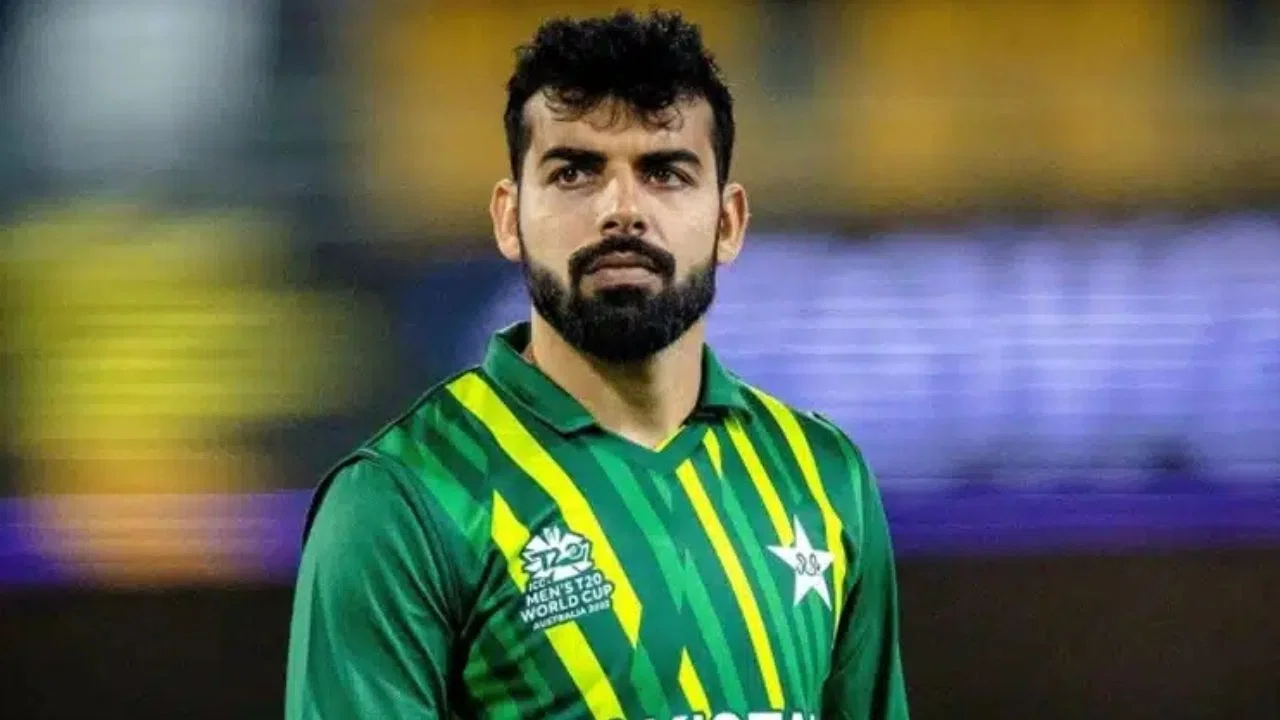
The cricketing world recently witnessed a candid and critical assessment of Pakistan all-rounder Shadab Khan‘s performance and selection, delivered by former Pakistan selector Basit Ali. Speaking on a panel with ARY News, Ali expressed strong reservations regarding Shadab’s inclusion in the Pakistan ODI team, particularly after his uninspiring display in the first One-Day International against Australia. This commentary unfolded following Pakistan’s notable five-wicket victory, a win that secured a 1-0 lead in the three-match series.
The match itself, held in Rawalpindi, marked a significant milestone for Pakistan cricket: its 1,000th ODI. This historic occasion placed Pakistan in an elite group, as only cricketing giants Australia and India had reached this landmark before them. Pakistan, opting to bowl first, capitalized on the favourable conditions. The pitch, offering assistance to spin bowlers, proved instrumental in restricting the Australian lineup. Despite half-centuries from Matthew Short and Matt Renshaw, the remainder of Australia’s batting order struggled under pressure, primarily due to the exceptional performance of debutant left-arm spinner Arafat Minhas.
Arafat Minhas Shines on Debut as Shadab Khan Falters
Arafat Minhas, who had previously impressed at the Under-19 level, seized his senior team call-up with both hands. He delivered a spectacular performance, concluding his spell with remarkable figures of 5 wickets for 32 runs from his 10 overs. This outstanding feat made him the first Pakistan player ever to claim a five-wicket haul on an ODI debut, a truly memorable entry into international cricket. Supporting Minhas, Abrar Ahmed contributed with two crucial wickets, while Salman Agha, Shaheen Afridi, and Haris Rauf each secured a solitary dismissal, collectively keeping Australia’s total in check.
In response, Pakistan comfortably chased down the target of 201 runs, largely thanks to solid contributions from Babar Azam and Ghazi Ghori, who scored 69 and 65 runs respectively. Fittingly, it was the debutant hero, Arafat Minhas, who hit the winning runs with a decisive six off Marnus Labuschagne, capping off an unforgettable debut.
However, amidst the celebrations of a historic win and a brilliant debut, the performance of seasoned all-rounder Shadab Khan became a point of contention. Of the six bowlers deployed by Pakistan in the match, Shadab was the only one who failed to register a wicket. His bowling figures were particularly concerning; he conceded 54 runs from his 8 overs, resulting in an economy rate of 6.75. This stood in stark contrast to his fellow bowlers, none of whom conceded more than 4.4 runs per over, highlighting a significant disparity in control and effectiveness.
Basit Ali Tears into Shadab’s Selection and Form
It was immediately after the match that Basit Ali launched his scathing critique, directly addressing Shadab Khan’s poor performances and his seemingly sudden return to the national squad after a prolonged absence. The Saturday game marked Shadab’s first One-Day International appearance since the ODI World Cup in November 2023, making his under-par showing even more scrutinised. This wicketless spell extended Shadab’s streak to five consecutive ODIs without a wicket, a concerning trend for an established international player. In one of these matches, he was not even given an opportunity to bowl.
Basit Ali did not mince words, directly challenging the rationale behind Shadab’s selection. He questioned, “You tell me, Shadab Khan has not played ODI cricket for three years now, so how did he come back into the team? He has not played ODI cricket; he has only played the PSL. After bowling four overs a day for three years, how can you bring him back to the ODI team?” Ali’s query underscored a broader concern about player pathways and fitness for the longer format after playing predominantly T20 cricket.
He further alleged, “This is blatant favouritism. Basit Ali was the first person to select Shadab Khan for Under-19 cricket. But when there is no performance, and you parachute the players into the team, the youngsters will not be happy. The youngsters will remain silent because of the PCB and the selectors, but these things damage Pakistan cricket in the end.” This pointed accusation highlights a deep-seated issue within Pakistani cricket, suggesting that deserving young talent might be overlooked in favour of established names, even when their current form does not warrant selection. Such practices, Ali argued, are detrimental to the long-term health and morale of the cricketing ecosystem.
Adding a layer of intense personal dynamic to the discussion, Shadab Khan’s father-in-law, legendary Pakistan off-spinner Saqlain Mushtaq, was seated on the very same panel, listening as Basit Ali delivered his sharp criticism. This created a visually striking and emotionally charged moment, which quickly circulated online:
Inconsistency Plagues Shadab Khan’s ODI Career
Since his ODI debut in 2017, Shadab Khan’s career in the 50-over format has been marked by considerable inconsistency, which ultimately led to his exclusion from the squad in 2023. In 71 One-Day Internationals, he has managed to secure 85 wickets at a bowling average of 35.45 and an economy rate of 5.26. While these figures are not entirely catastrophic, they do indicate a struggle for sustained impact, especially when compared to elite international spinners. With the bat, Shadab has contributed 855 runs in 44 innings, averaging 25.9 with a strike rate of 86, showcasing his all-rounder potential but also a lack of consistent match-winning performances.
The debate ignited by Basit Ali’s comments underlines a recurring challenge for Pakistan cricket: balancing the experience of established players with the imperative to foster new talent and reward current form. The incident serves as a stark reminder of the intense scrutiny faced by cricketers and selectors alike, especially in a passionate cricketing nation like Pakistan, where every selection and performance is dissected with fervent interest. The call for merit-based selections and accountability resonates deeply, as fans and former players alike demand a transparent approach that prioritizes the team’s long-term success above all else.