Mumbai Indians Player Ratings For IPL 2026 – Mumbai Indians IPL 2026 Player Ratings: A Season of Disappointment
A Campaign of Frustration
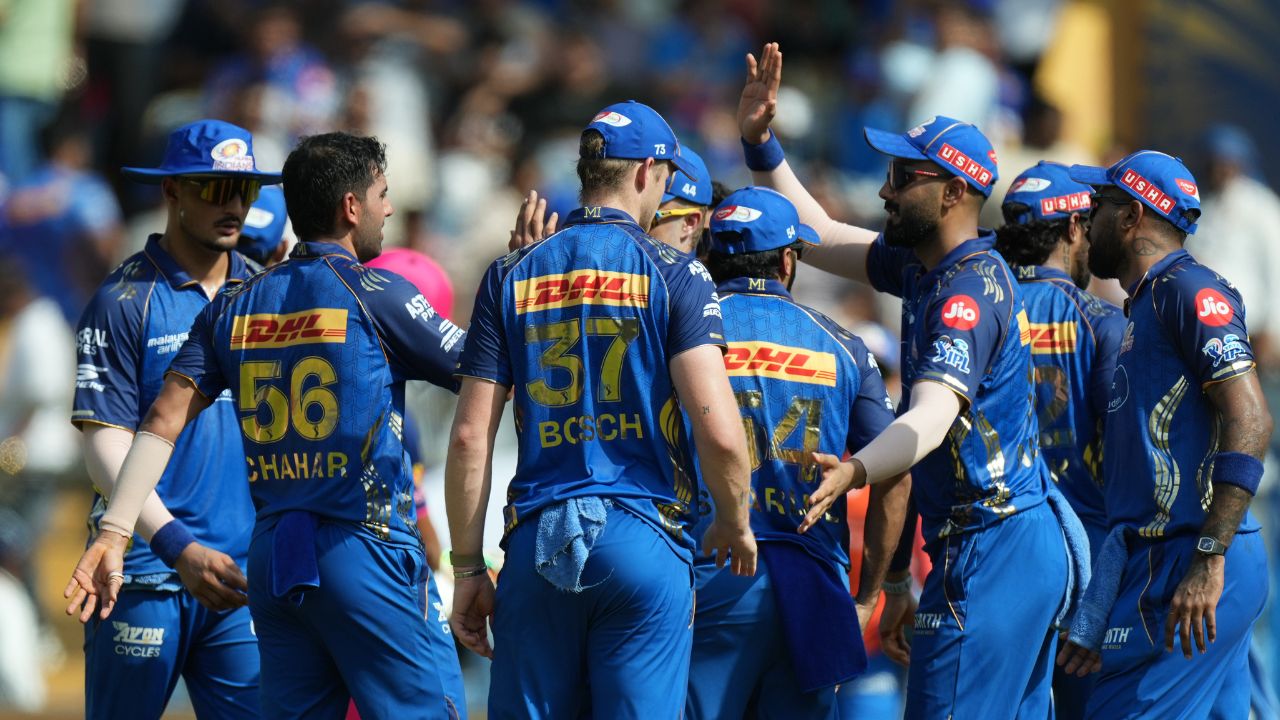
The IPL 2026 season will likely be remembered as a nightmare for the Mumbai Indians faithful. Having secured only four victories out of 14 group-stage matches, the franchise finished in ninth place on the points table, extending their title drought to six years. Despite flashes of individual brilliance, the team struggled for consistency and cohesion, leaving management and fans searching for answers.
Individual Player Ratings
The Batting Core
Rohit Sharma (6.5/10): Despite dealing with a mid-tournament hamstring injury, Rohit remained a vital presence. Scoring 283 runs in 9 innings at a strike rate of 157.22, his aggressive intent in the powerplay provided the team with necessary momentum.
Ryan Rickelton (7.5/10): The South African opener was arguably the brightest spark of the season. With 448 runs in 12 innings and a blistering strike rate of 186.67, Rickelton brought fearlessness to the top of the order.
Naman Dhir (8/10): A standout performer, Dhir displayed remarkable maturity. Accumulating 318 runs in 14 innings, his ability to navigate high-pressure situations established him as a cornerstone of the middle order.
Tilak Varma (7/10): Varma enjoyed a respectable campaign, highlighted by a stunning unbeaten 101 off 45 balls against the Gujarat Titans. Finishing with 359 runs at a strike rate of 145.93, he proved his worth as a premier attacking batter.
Suryakumar Yadav (5/10): Expectations for the Indian T20I captain were sky-high, but he failed to hit his stride. With 270 runs in 13 innings, his inconsistency mirrored the team’s struggles.
Hardik Pandya (4/10): A season to forget for the captain. Pandya managed only 206 runs and took four wickets while conceding runs at a concerning economy rate of 11.43. His leadership and individual output faced intense scrutiny throughout the year.
Will Jacks (6.5/10): After joining late, Jacks added necessary firepower, scoring 139 runs at a strike rate of 182.89 across 7 matches. His aggressive approach offered a glimpse of what could have been with more time.
Quinton de Kock (7.5/10): Stepping up after injury disruptions, de Kock was clinical in his three appearances, scoring 132 runs at a strike rate of 162.96.
Sherfane Rutherford (6.5/10): Rutherford provided reliable finishing, including an unbeaten 71, ending the season with 123 runs at a 164.00 strike rate.
The Bowling Attack
Shardul Thakur (7/10): Thakur emerged as the team’s most effective bowler, claiming 12 wickets in 7 innings. His ability to break partnerships during critical junctures was a rare positive.
Allah Ghazanfar (6/10): The young spinner was a prolific wicket-taker, securing 15 scalps. While his economy rate above 10 was high, his knack for taking wickets in the middle overs proved valuable.
Jasprit Bumrah (7.5/10): Though he endured his toughest IPL season statistically with only four wickets in 13 matches, Bumrah remained economical (8.37) and maintained the high standard of discipline fans expect.
Deepak Chahar (5/10): Chahar struggled with consistency, particularly at the death. He took 8 wickets in 8 games but finished with an expensive economy rate of 10.39.
Corbin Bosch (6/10): Bosch provided useful balance, contributing quick runs and taking four wickets. His versatility was a useful asset in the latter half of the season.
Raghu Sharma (6/10): Making his debut at 33, Sharma was a composed presence. His 8.67 economy rate across five innings showed a level of control that many of his teammates lacked.
Mayank Markande (4/10): A difficult season saw Markande struggle to find rhythm, leaking runs at an economy of 15.20 without taking a wicket, eventually losing his spot in the side.
Conclusion
The 2026 IPL season represents a period of necessary reflection for Mumbai Indians. While some players emerged with their reputations enhanced, the collective failure to secure wins highlights a need for structural changes and tactical reassessment before the next cycle begins.