Tickner five-for wraps up innings win for New Zealand – New Zealand Beat Ireland by an Innings as Tickner Claims Maiden Five-For
New Zealand Dominate in Belfast to Secure Innings Victory
New Zealand wrapped up a comprehensive, clinical performance in Belfast, defeating Ireland by an innings and 79 runs on the third day of the Test match. Resuming the day at 65 for 2 after being forced to follow on, Ireland faced a monumental task, trailing by 246 runs with eight wickets in hand. Despite resilient half-centuries from Stephen Doheny and Lorcan Tucker, alongside some late-order fireworks from Mark Adair, the Black Caps’ bowling attack proved too potent, dismissing the hosts for 232 in their second innings.
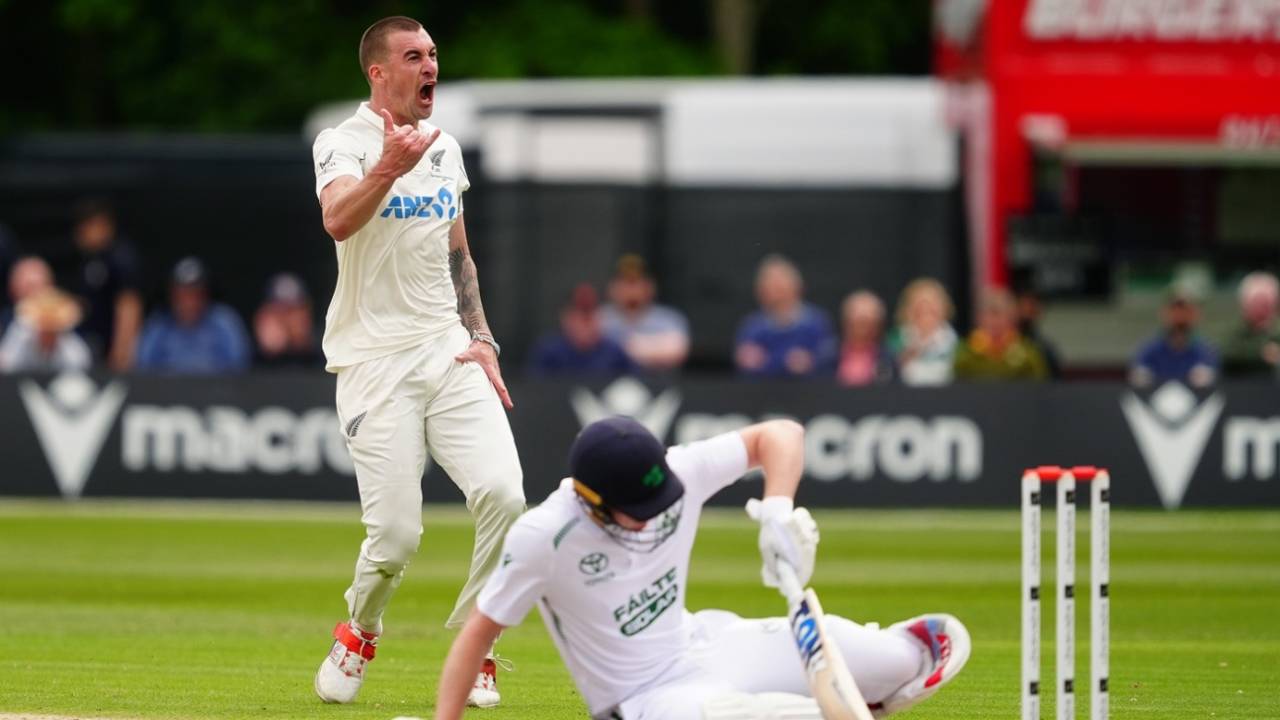
The star of the final day was paceman Blair Tickner, who claimed his maiden five-wicket haul in Test cricket, finishing with impressive figures of 5 for 76. Tickner’s hostile spell of fast bowling, combined with a relentless short-ball strategy, dismantled Ireland’s batting lineup and ensured New Zealand secured the victory with four sessions to spare in the match.
Relentless Pressure and Early Breakthroughs
As the third day commenced, Belfast offered some respite from the recent heatwave, with temperatures dipping below 20 degrees Celsius. However, the overhead conditions did little to cool down the fiery New Zealand pacemen. Nathan Smith, who had already dismantled Ireland in the first innings with a sensational six-wicket haul (6 for 40), wasted no time in making an impact on day three.
Within the first five overs of the morning session, Smith produced a beautiful, full inswinger that found the edge of nightwatcher Thomas Mayes’ bat, sending it straight to second slip. Mayes was gone, and Ireland’s uphill battle became even steeper. At the other end, opener Stephen Doheny showed impressive footwork, negotiating the early swing with confidence and resuming his overnight score of 26 with determination.
The Short-Ball Barrage and Injury Woes
With clouds hovering overhead, New Zealand’s fast-bowling duo of Smith and Tickner pivoted to a concerted short-ball plan. The aggressive tactical shift quickly reaped rewards. In the 26th over, Tickner directed a sharp bouncer at Harry Tector’s shoulders. Tector, attempting to duck out of the way, was caught in an awkward position as the ball pinged off his bat handle and looped gently to second slip.
Things went from bad to worse for Ireland when Curtis Campher was forced to retire hurt. Campher had struggled immensely against the rising deliveries, and his discomfort peaked when a sharp bouncer reared up and struck his left hand. Unable to continue, Campher walked off the field to undergo scans, leaving Ireland effectively one batter down for the remainder of their innings.
Doheny’s brave resistance was also cut short by the short-ball barrage. Just before a rain delay brought an early end to the first session, Doheny fended at another accurate snorter from Tickner, gloving the ball to gully to depart for a well-made 57. By the time lunch arrived, Ireland was reeling at 131 for 5.
Tucker and Adair Fight Back in the Afternoon
When play resumed in the second session, the overhead clouds had partially cleared, and the swing on the Dukes ball began to subside. New Zealand adjusted their tactics, shifting fielders to pack the off side. This setup allowed Lorcan Tucker to showcase his shot-making abilities. Tucker took full advantage of any width outside the off stump, playing several exquisite cover drives and successfully evading the bouncers that came his way.
Tucker reached his half-century off just 69 deliveries, offering a glimmer of hope for a sustained Irish rearguard. However, his innings ended abruptly on the very next ball. Attempting to pull another bouncer, Tucker swung across the line and miscued the shot high over the wicketkeeper’s head. Daryl Mitchell, running in from the slip cordon, judged the catch perfectly to dismiss the dangerous wicketkeeper-batter for 50.
With the tail exposed, Mark Adair walked out at No. 9 and played with remarkable freedom and panache. To counter the bouncers directed at him by Tickner and Zak Foulkes, Adair routinely shuffled toward the leg side, creating room to play powerful cross-batted swats over the vacant midwicket boundary. His aggressive approach yielded a quickfire, unbeaten 44 off just 47 balls—marking the fastest individual knock for Ireland in the Test.
Tickner Seals His Maiden Five-For
New Zealand eventually neutralized Adair’s scoring options by angling their bouncers tighter into his body and targeting yorkers at his feet. With partners running out, the end came swiftly. Reuben Wilson, stuck deep in his crease, wafted at a wide delivery from Tickner and feathered an edge to the wicketkeeper.
The dismissal sparked celebrations for New Zealand and secured Blair Tickner his maiden Test five-wicket haul. Ireland’s second innings concluded at 232, giving New Zealand a comprehensive victory by an innings and 79 runs. The win was set up by a massive first-innings total of 490 for 8 declared, anchored by Tom Blundell’s magnificent 186, Rachin Ravindra’s elegant 121, and Dean Foxcroft’s solid 98.
Looking Ahead
With this dominant performance wrapped up, New Zealand will travel to London to begin their preparations for a highly anticipated three-Test series against England. Meanwhile, Ireland will regroup as they prepare to host India at the end of June for an exciting T20I series on home soil.