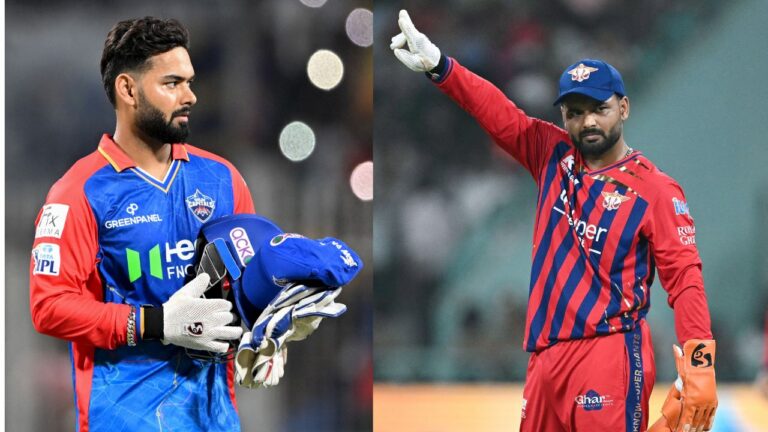
Watch- Sai Sudarshan’s Comical Hit Wicket Copied In England – Sai Sudarshan’s Bizarre Hit-Wicket Replicated in T20 Blast: A Look at Cricket’s Unpredictable Dismissals
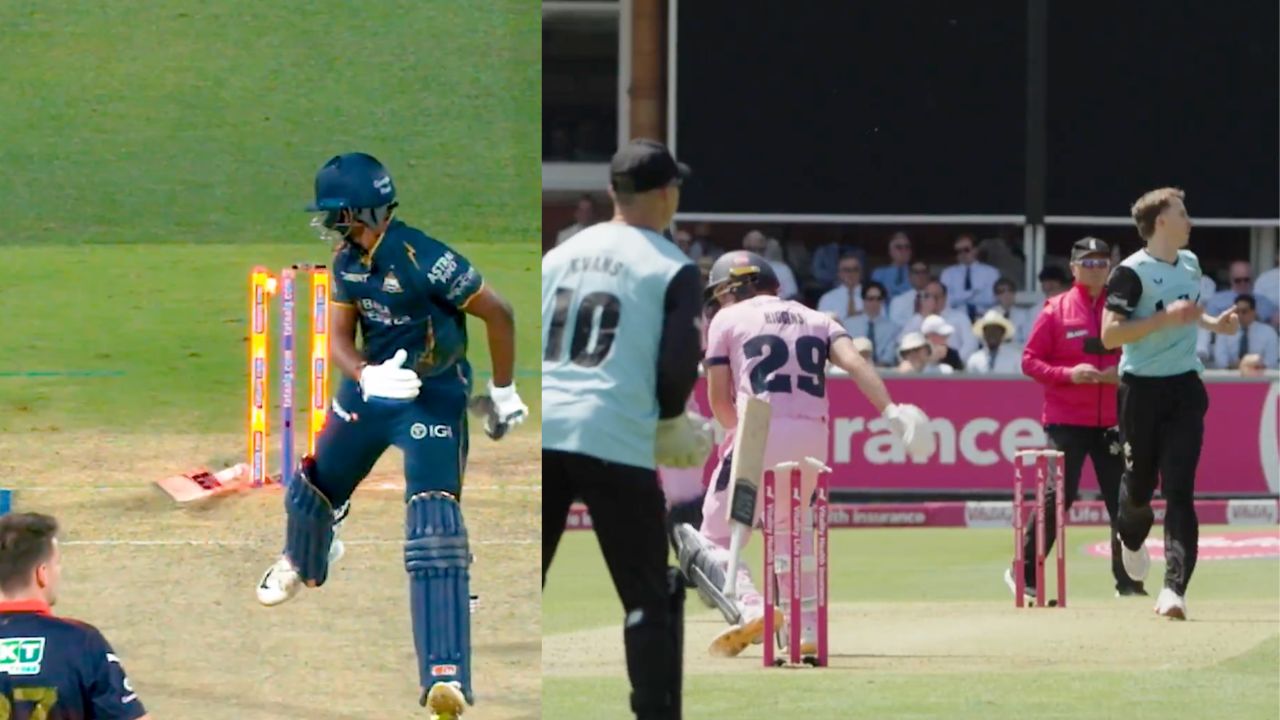
Cricket, often lauded for its intricacies and traditions, occasionally presents moments of sheer unpredictability and even comical misfortune. Such was the case recently when Gujarat Titans’ promising opener Sai Sudarshan was dismissed via hit-wicket in a crucial IPL 2026 Qualifier. Remarkably, this unusual mode of dismissal found a near-identical echo just two days later in England’s T20 Blast, involving Middlesex’s Ryan Higgins. These events have not only become major talking points but also highlight the fine margins and inherent risks in modern T20 batting.
Sai Sudarshan’s Controversial Hit-Wicket in IPL Qualifier 1
The incident involving Sai Sudarshan occurred during the IPL 2026 Qualifier 1 clash between Gujarat Titans (GT) and Royal Challengers Bangalore (RCB). While chasing a formidable target, Sudarshan, known for his aggressive style, was attempting to accelerate the scoring against RCB bowler Jacob Duffy. Having already struck three boundaries off Duffy’s bowling, the left-handed batter aimed for another maximum. In his vigorous follow-through, however, he lost grip of his bat, which subsequently crashed onto the stumps, dislodging the bails.
The on-field umpire’s decision to give Sudarshan out, entirely within the Laws of Cricket, ignited a fervent debate within the cricketing community. While some argued for the harshness of the dismissal given the context of a high-stakes match, others maintained that the law is clear and applies to all batters equally. Sudarshan’s unfortunate exit added his name to the lengthy list of batters dismissed via hit-wicket, a dismissal that often leaves both the batter and spectators bewildered.
The Uncanny Replication: Ryan Higgins in T20 Blast
Just 48 hours after Sudarshan’s dismissal, the cricketing world witnessed an almost identical scenario unfold in the United Kingdom during the T20 Blast 2026. In a match between Middlesex and Surrey, Ryan Higgins found himself at the receiving end of a bizarre hit-wicket dismissal. Facing Surrey’s Tom Curran, Higgins attempted to punch a delivery through the covers. In a moment of striking similarity to Sudarshan, he lost control of his bat during the follow-through, and the willow flew upwards before descending directly onto the leg bail. Higgins was dismissed for 13 runs off 16 balls, a dismissal that undoubtedly compounded the pressure on his team.
This peculiar double occurrence underscored the unpredictable nature of cricket and offered a fascinating parallel between two different T20 leagues. It served as a stark reminder that even seasoned professionals, under pressure, can fall victim to such rare and unfortunate circumstances.
Recap of GT vs RCB Qualifier 1: A Record-Breaking Encounter
The Qualifier 1 encounter between Gujarat Titans and Royal Challengers Bangalore in Dharamsala was a spectacle of power-hitting and a testament to RCB’s formidable batting lineup. Royal Challengers Bangalore, batting first, posted an astonishing total of 254/5 – the highest ever in IPL playoffs history. This monumental score was largely propelled by a sensational innings from Rajat Patidar, who hammered an unbeaten 93 runs off just 33 deliveries, an innings embellished with five fours and nine maximums. Patidar received excellent support from Krunal Pandya, with whom he forged a crucial 95-run partnership. While Virat Kohli laid a brisk foundation, it was Patidar’s explosive knock that truly set the stage for RCB’s dominance.
Chasing such a colossal target was always an uphill battle for Gujarat Titans. Despite a valiant effort from Rahul Tewatia, who scored a courageous 68 runs off 43 balls, GT struggled to maintain momentum, losing wickets at regular intervals. Ultimately, Gujarat Titans were bowled out for 162 runs, succumbing to a massive 92-run defeat. This loss meant that the defending champions would need to regroup and fight for another chance at the finals in Qualifier 2.
The Road Ahead: GT vs RR Qualifier 2 and the Threat of Vaibhav Sooryavanshi
Following their defeat, the Shubman Gill-led Gujarat Titans were set to face Rajasthan Royals in Qualifier 2 in New Chandigarh. This match represented a critical juncture for GT, offering them a second opportunity to secure a spot in the finals. However, standing in their way was a significant challenge in the form of Rajasthan Royals’ prodigious talent, Vaibhav Sooryavanshi. The 15-year-old batting sensation had been the talk of the season, amassing an incredible 680 runs in just 15 innings at an astonishing strike rate of 242.86.
Sooryavanshi’s impact was particularly notable against Gujarat. In the two prior encounters between GT and RR during the season, with each team securing a victory, Sooryavanshi had consistently troubled the Gujarat bowlers. His aggressive approach and ability to score rapidly, especially inside the powerplay, posed a genuine threat. To counter this, GT’s strategy would likely involve utilizing the pace and short deliveries of Kagiso Rabada, aiming to unsettle Sooryavanshi and potentially exploit any vulnerabilities in his aggressive style early in his innings.
Understanding the Hit-Wicket Dismissal in T20 Cricket
The hit-wicket dismissal, while adhering strictly to the Laws of Cricket, often feels particularly cruel to the batter. It occurs when a batter puts down their wicket with their bat or body while playing a shot or setting off for a run. In the fast-paced, high-stakes environment of T20 cricket, such dismissals appear to be occurring with increasing frequency. This can be attributed to several factors inherent in the modern T20 game.
Batters are constantly encouraged to take risks, push boundaries, and generate maximum power in their shots. This often involves standing deep in the crease to access certain angles or generate leverage, or swinging the bat with such force that maintaining a firm grip becomes challenging, especially if palms are sweaty or the bat handle is not perfectly secure. The aggressive intent required to score rapidly in T20s can sometimes lead to momentary loss of balance or control, resulting in the bat making contact with the stumps.
While it is within the rules, such dismissals highlight the fine line batters walk between aggressive intent and precise execution. To mitigate the risk of a hit-wicket, batters might consider minor adjustments such as being mindful of how deep they are standing in their crease and ensuring a secure grip on the bat, perhaps by changing gloves if perspiration becomes an issue. Ultimately, the hit-wicket remains a quirky, yet legitimate, aspect of cricket that adds to its unpredictable charm and drama.