Auqib Nabi’s India Snub Sparks Political Debate After Ranji Trophy Heroics
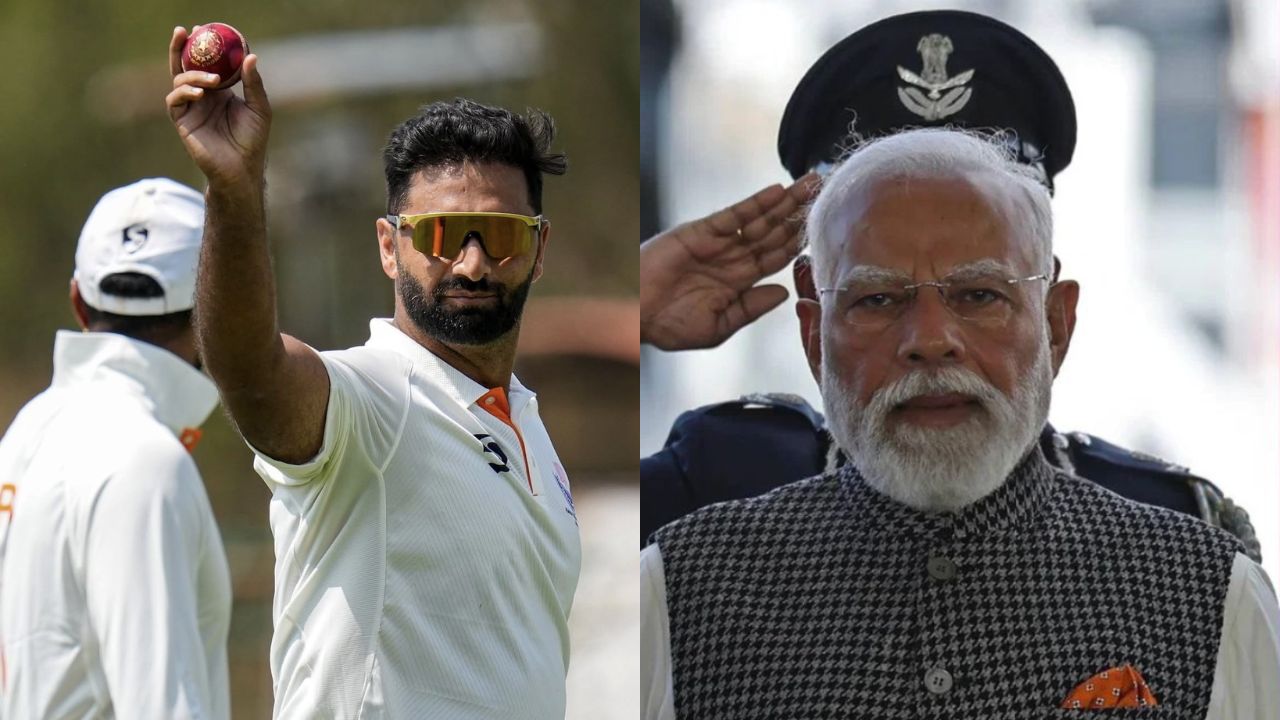
Auqib Nabi’s India Snub Ignites Political Firestorm
The recent announcement of India’s 15-player squad for the one-off Test against Afghanistan has generated significant discussion, not least due to a notable omission. Fast bowler Auqib Nabi, who delivered a sensational performance for Jammu and Kashmir in the 2025-26 Ranji Trophy season, surprisingly failed to secure a spot in the national side. This decision by the Board of Control for Cricket in India (BCCI) has not only perplexed cricket enthusiasts but has also escalated into a political controversy, drawing prominent figures into the debate. The case of Auqib Nabi underscores the intense scrutiny surrounding national team selections, especially when a player’s domestic form appears overwhelmingly strong.
Auqib Nabi’s Dominant Ranji Trophy Season
Auqib Nabi’s credentials for national consideration are undeniably robust, stemming from an exceptional 2025-26 Ranji Trophy campaign. Representing Jammu and Kashmir, the 29-year-old right-arm fast bowler was the spearhead of his team’s attack, playing a pivotal role in their historic triumph. Across 10 matches and 17 innings, Nabi dismantled opposition batting lineups, claiming an astonishing 60 wickets. His remarkable consistency was highlighted by an outstanding bowling average of 12.56, a statistic that places him among the most impactful bowlers in recent Ranji Trophy history. Furthermore, Nabi demonstrated a knack for match-winning performances, registering seven five-wicket hauls throughout the tournament.
The pinnacle of his season came in the Ranji Trophy final against Karnataka, held in Hubli. In a high-stakes encounter, Auqib Nabi delivered a masterful spell, securing figures of 5-54. This crucial five-wicket haul was instrumental in establishing a commanding first-innings lead of 291 runs for Jammu and Kashmir, effectively setting the foundation for their title victory – a feat achieved after 67 long years. Such a performance in a final, under immense pressure, typically serves as a strong indicator of a player’s temperament and ability to perform on the big stage, making his subsequent exclusion from the national squad even more perplexing for many observers.
Political Fallout: Questions Raised by Waheed Para
The decision to overlook Auqib Nabi has not remained confined to cricketing circles; it has rapidly evolved into a political discussion. Waheed Para, a prominent politician from the Jammu and Kashmir People’s Democratic Party, publicly questioned the BCCI’s selection process. Taking to social media platform X, Para directly addressed top cricketing administrators, including BCCI President Mithun Manhas and ICC Chairman Jay Shah, highlighting what he perceived as a baffling injustice.
Para’s post underscored Nabi’s significant contributions, stating, “Aqib Nabi, the man behind J&K’s historic Ranji Trophy success after 67 years, Player of the Match, IPL-selected, and praised by Indian Prime Minister, Home Minister and CM and cricket fans across India has surprisingly been dropped from the India team in the list released by BCCI today. Truly shocking FYI, @MithunManhas @JayShah.” This statement brought into sharp focus not only Nabi’s on-field achievements but also the broader implications of his exclusion, especially given his regional background and the political significance of his success.
A particularly poignant aspect of Para’s criticism was his recall of Prime Minister Narendra Modi’s past commendation of Auqib Nabi. Following Jammu and Kashmir’s historic Ranji Trophy title win, Prime Minister Modi had himself acknowledged Nabi’s efforts, celebrating the team’s achievement. This prior recognition from such a high political office adds another layer of complexity to the current controversy, with questions now being raised about the consistency between national appreciation for regional talent and actual selection decisions. The political dimension of this snub emphasizes the deep emotional and regional connections that often intertwine with sports in India, making selection decisions subject to intense public and political scrutiny.
IPL Stint and Broader Context
While Auqib Nabi’s Ranji Trophy numbers are undeniably impressive, it is also important to consider his performance in other formats, particularly the Indian Premier League (IPL). Nabi was picked up by the Delhi Capitals franchise for the IPL 2026 season, a testament to his potential and the recognition he garnered from his domestic red-ball success. However, his IPL journey has not yet mirrored his first-class heroics. In his four appearances for the Delhi Capitals, the right-arm quick has, to date, failed to pick up a single wicket.
This disparity in performance across formats often plays a role in national selection decisions, especially when considering a player for the Test arena where sustained performance under different pressures is paramount. While the Ranji Trophy showcases endurance and skill with the red ball, IPL involvement can sometimes offer insights into a player’s adaptability and performance under the white-ball spotlight. It is possible that the selectors are weighing Nabi’s IPL figures, albeit limited, against his dominant Ranji Trophy form, or perhaps they are looking at a broader pool of fast bowlers who have demonstrated consistency across various formats or have more extensive experience in high-pressure T20 leagues. This nuanced perspective might offer some explanation for the decision, even as the political implications continue to unfold.
Other Squad Changes and Debutants
Beyond Auqib Nabi’s highly debated exclusion, the BCCI’s squad announcement for the Afghanistan Test featured several other noteworthy selections and changes. The national selectors opted to introduce three potential debutants, signaling a focus on nurturing new talent for the longest format of the game. These promising cricketers are Harsh Dubey, Gurnoor Brar, and Manav Suthar, all of whom will be keen to make their mark on the international stage if given the opportunity.
Among the more experienced players, all-rounder Ravindra Jadeja was conspicuously absent from the squad. Chief selector Ajit Agarkar clarified that Jadeja has been rested, indicating a strategic decision to manage the workload of key players. Furthermore, the vice-captaincy for the Test was handed to KL Rahul. This move is particularly interesting given that Rishabh Pant had led the side during the previous year in the absence of an injured Shubman Gill, who retains the captaincy for this fixture. These changes reflect the dynamic nature of team selection, balancing experience with emerging talent and tactical resting strategies.
India Squad for Afghanistan Test
- Shubman Gill (c)
- Yashasvi Jaiswal
- KL Rahul (vc)
- Sai Sudharsan
- Rishabh Pant
- Devdutt Padikkal
- Nitish Kumar Reddy
- Washington Sundar
- Kuldeep Yadav
- Mohammed Siraj
- Prasidh Krishna
- Manav Suthar
- Gurnoor Brar
- Harsh Dubey
- Dhruv Jurel
The composition of this squad highlights a blend of established performers and fresh faces, poised to take on Afghanistan in what promises to be an engaging Test match. The focus remains on performance, even as external narratives surrounding selection decisions continue to generate headlines.