Litton Das Reveals Mindset Behind His Heroic Century Against Pakistan
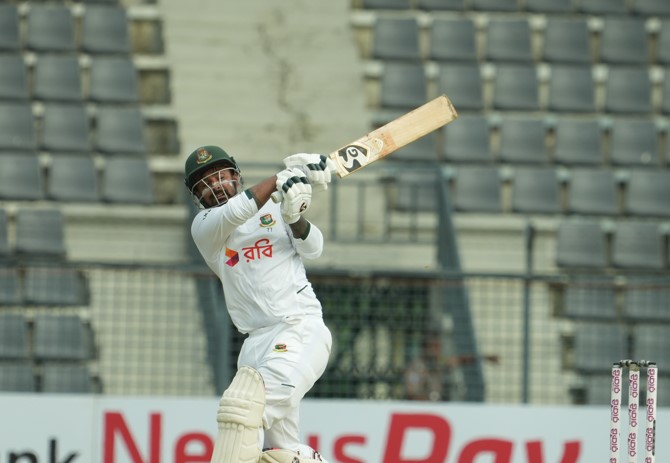
The Art of Survival: Litton Das and the Tailenders
In the high-pressure environment of Test cricket, few challenges are as daunting as walking to the crease when the top order has collapsed. For Bangladesh’s Litton Das, this scenario has become a recurring theme, one that requires not just technical prowess but a complete shift in psychological approach. His recent unbeaten 126-run innings against Pakistan served as a masterclass in resilience, rescuing his side from a dire 126 for 6 and proving why he is a vital cog in the Bangladeshi lineup.
A Shift in Tactical Mindset
Litton Das typically operates at the No. 6 position, a role that often demands patience and the ability to steer the innings alongside the lower-order batters. As Das explained following the match, his approach changes drastically depending on his partner. ‘My role is a bit different. In Test cricket, sometimes I bat with Mushfiqur bhai or Miraz. When you have proper batters with you, your mindset is different. You know singles will come easily. But with the tail, it’s not like that—they don’t get many chances to face balls,’ he noted.
This realization forces Das to adopt a more protective strategy. Unlike batting with established partners where the strike can be rotated effortlessly, batting with the tail requires him to absorb the majority of the deliveries, effectively shielding his partners from the opposition’s bowling attack.
The Crucial Support of the Tail
Despite the inherent risks, Das was quick to heap praise on the tailenders who provided the support he needed to reach triple figures. During his innings, Taijul Islam faced 40 balls, Shoriful Islam faced 30, and Taskin Ahmed added 14. This support was the backbone of Bangladesh’s recovery.
Reflecting on the partnership, Das shared, ‘Taijul, Taskin, and Shoriful all faced a lot of balls. That made a big difference. As a batter, it is my responsibility to score runs. But if they stay longer, my job becomes easier.’ He admitted that he often tries to restrict his partners to just one or two balls per over, a caution born from past experiences where giving the tail too much of the strike resulted in immediate wickets.
The Tension at 99
The psychological toll of such a performance is immense. When asked about the pressure as he approached his century, Das admitted to feeling immense strain. ‘It can’t really be explained. At that time, I was thinking I need to face most of the balls and give only 1-2 balls to the tail. That was my mindset. I was very tense when I was on 99, especially when Shoriful got hit on the foot,’ he recalled. His constant communication with Shoriful, encouraging him to play forward and handle the back-of-a-length deliveries, was a testament to the leadership he provided under duress.
Comparing the Pressure Points
This century stands alongside other iconic performances in Das’s career, most notably his heroic partnership with Mehidy Hasan Miraz in Rawalpindi and his fighting century against Sri Lanka. When comparing these knocks, Das emphasized the structural differences in the partnerships. ‘The Sri Lanka innings was different because I had Mushfiqur bhai with me, so the mindset was clear. In Rawalpindi, I had Miraz. Today was completely different. You can’t plan a century,’ he stated.
The common thread, however, remains the ability to thrive under pressure. In Rawalpindi, he had to resort to aggressive tactics, including hitting sixes off the pacers, to compensate for the slow outfield and the fragility of the batting lineup. In the Sylhet Test, the goal was simpler: ensure the team moved past the 200-run mark. ‘My target was to see how the runs come. When Taijul came in, we were 116 on the board. My focus was how to take the team to 200,’ he added.
Looking Ahead
Litton Das’s innings was more than just a personal milestone; it was a demonstration of how a senior batter should anchor a team. By prioritizing the team’s needs over personal stats and managing the strike with clinical precision, he navigated a crisis that could have easily ended in a disastrous collapse. As Bangladesh looks to future Test matches, the template Das has set—a blend of technical discipline, tactical awareness, and unwavering support for lower-order partners—will undoubtedly serve as a blueprint for the team’s middle-order stability.
Ultimately, Das does not look to chase centuries; he chases stability. By focusing on the immediate objective—getting to 200, protecting the tail, and navigating the next delivery—he has once again proven that he is one of the most reliable pressure-players in the game today.